John Henry Ingram was a young, ambitious Englishman endeavoring to write the first true biography of Edgar Allan Poe. In 1873, he wrote to Sarah Helen Whitman appealing for her aid. Whitman had already spent the last few decades of her life vindicating Poe and publishing her own pieces about him, including her own short biography titled Edgar Poe and His Critics, in 1860. She wrote back to Ingram, unknowingly starting a very turbulent, dramatic, and peculiar correspondence over the next five years.
Whitman was optimistic of Ingram’s prospects, but she did not hesitate to assist other aspiring biographers where she saw fit. This often angered Ingram, as Whitman was such an asset to him that he did not want to share this treasure trove of information. The idea of having another biographer possibly steal his spotlight caused Ingram to be moody, unappreciative, and just plain crass. However, Whitman never wavered. She handled him with the utmost eloquence while outwitting and outdoing him. She never made it obvious, allowing Ingram to realize for himself that she was socially superior.
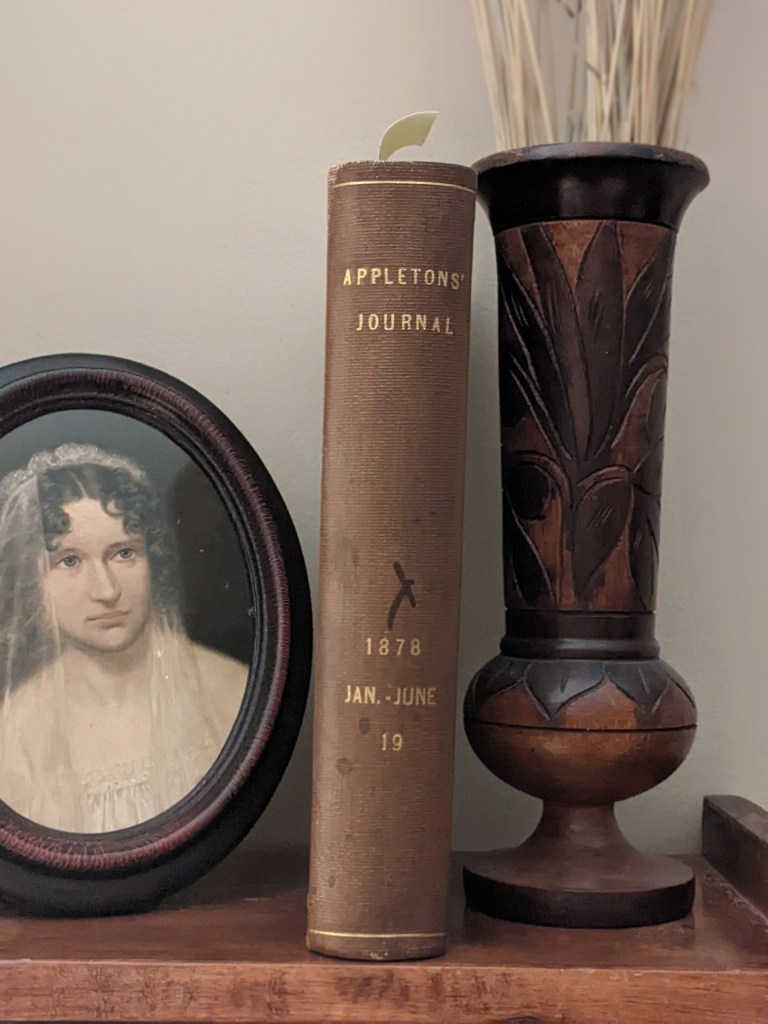
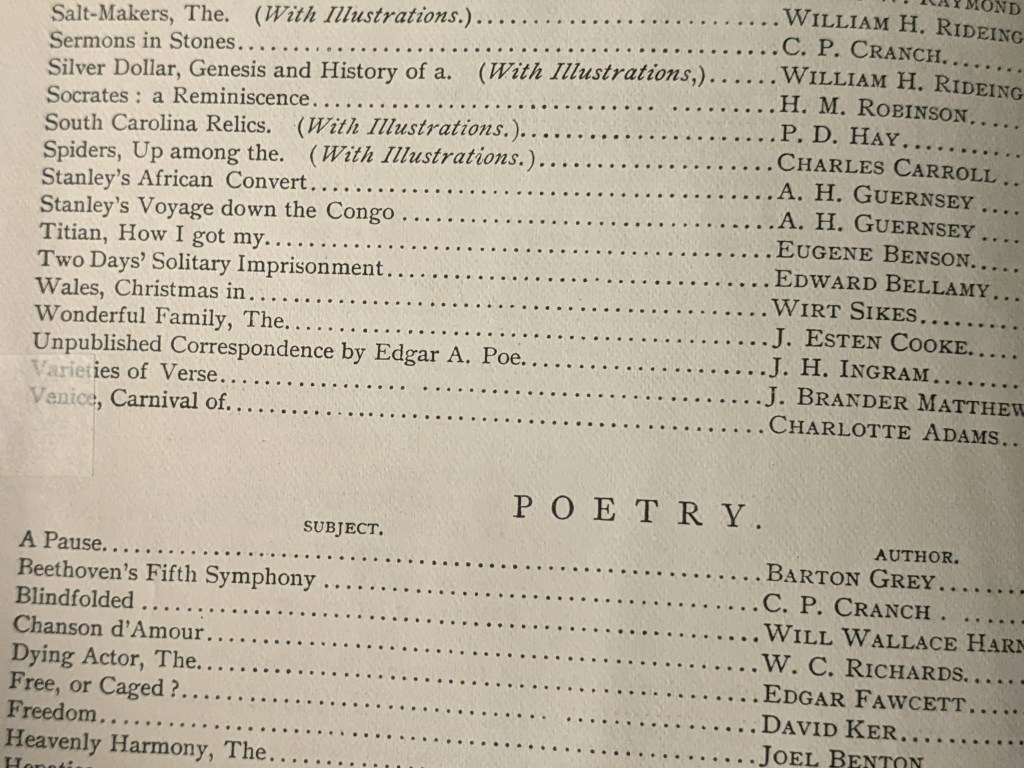
Despite Ingram’s capricious nature, Whitman continued to write to him, sending him a plethora of information and materials regarding Poe. But she was not the only one sending Ingram pieces of Poe’s life. Marie Louise Shew and Nancy “Annie” Richmond also aided Ingram in his quest after he had reached out to them. These women were involved with Poe in varying degrees of romantic intensity, albeit, mostly one-sided. They were the subject of an article published by Ingram in Appleton’s Journal in May, 1878, titled “Unpublished Correspondence of Edgar Allan Poe.” This article was the final straw in the five year relationship between Whitman and Ingram.
In a hurry to get this previously unpublished material to press, Ingram made public some of the letters provided by these ladies that were written to them by Poe. It was the letters from Poe to Annie (a married woman in Lowell, Massachusetts) that served as the fatal jab on the seventy five-year-old Whitman’s ailing heart. A letter from Poe to Annie dated November 16, 1848 opens: “Ah, Annie, Annie! What cruel thoughts must have been torturing your heart during the last terrible fortnight in which you heard nothing from me—not even one little word to say that I lived…But, Annie, I know that you felt too deeply the nature of my love for you to doubt that, even for one moment, and this thought has comforted me in my bitter sorrow.”
The letter continues on with more professions of love and even a request for Annie to visit him to comfort him, calling her his “pure beautiful angel.” This letter is by no means unusual for Poe in his attempts to swoon a woman; however, it is the date of the letter that devastated Whitman. For the first time in her life, Whitman found out that Poe was writing impassioned letters to other women in November, 1848, the exact time he was pursuing Whitman in Providence. Ingram knew the implications of publishing this letter, but he did it anyway.

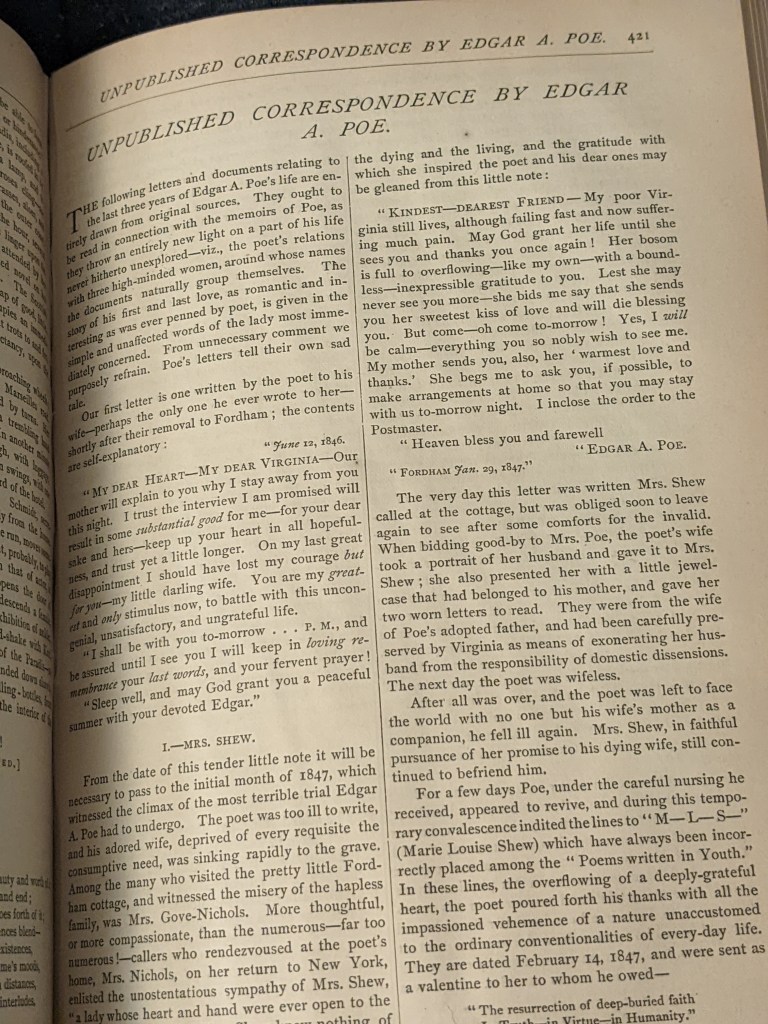
But it does not stop there. Ingram included even more letters from Poe to Annie that were written after Poe’s relationship with Whitman ended. In one of these letters, Poe writes: “Indeed, indeed, Annie, there is nothing in this world worth living for except love—love not such as I once thought I felt for Mrs. —, but such as burns in my very soul for you[…].”

It is bold to think that Ingram was doing some kind of justice to Whitman by dashing out her name in the transcription of Poe’s letter, but she was not a fool. The publication of these letters absolutely crushed her. Whitman truly believed that she was one of the only true loves of Poe after the death of his wife. Not only was this a posthumous betrayal from a man she came so close to marrying three decades prior, but a betrayal from the friend she had invested so much of her time in over the last five years. Ingram omitted other pieces entirely from the letters that would have certainly been even more damaging to Whitman, including a line where Poe calls her mother the devil. Still, Ingram’s thoughtlessness cost him everything. Not only did it tarnish his relationship with Whitman, but it inadvertently worked against what they were both working so hard to achieve: defending Poe’s name. The article made Whitman look bad, and made Poe look even worse. In a final act of courage and redemption, Whitman published her first and only attack on Ingram in The Providence Journal, discrediting his article and questioning his discretion. A month later she was in her grave, undoubtedly put there after the realization that she could no longer linger in her efforts on this cold earth. She could only hope that her work was enough to accomplish the mission she set forth despite so much adversity. Centuries later, her efforts proved not in vain.
 Edgar Allan Poe: Rhode Island