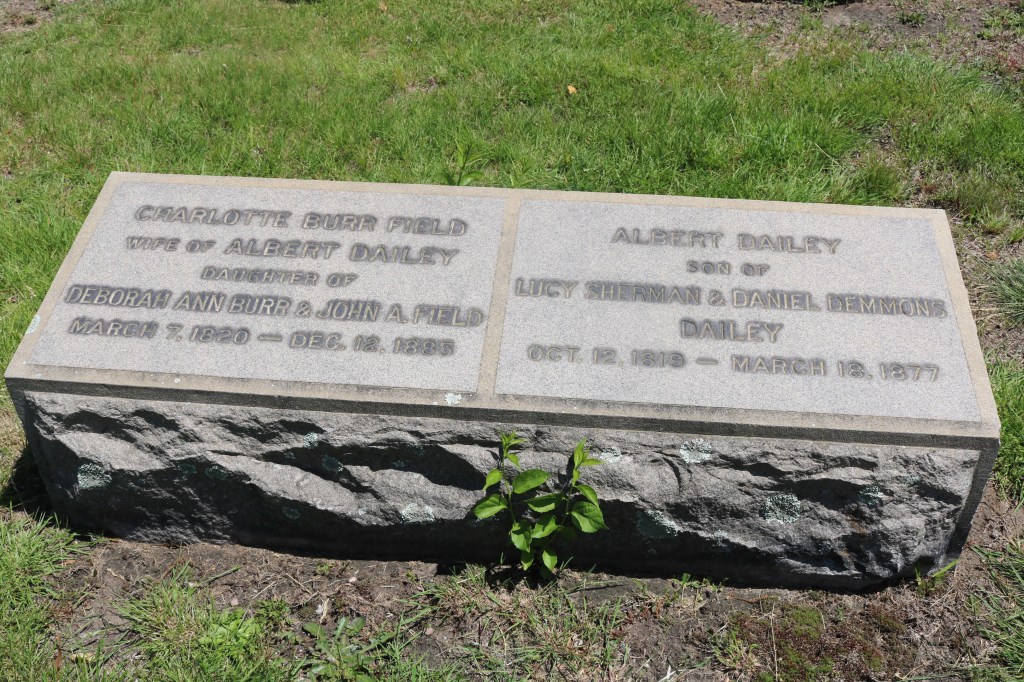
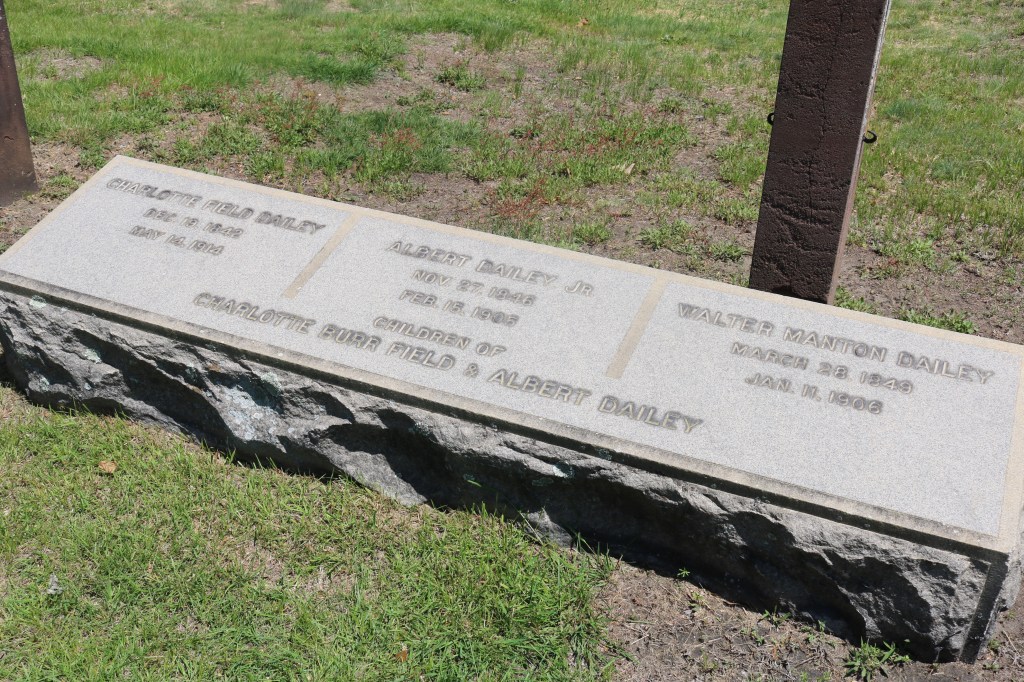
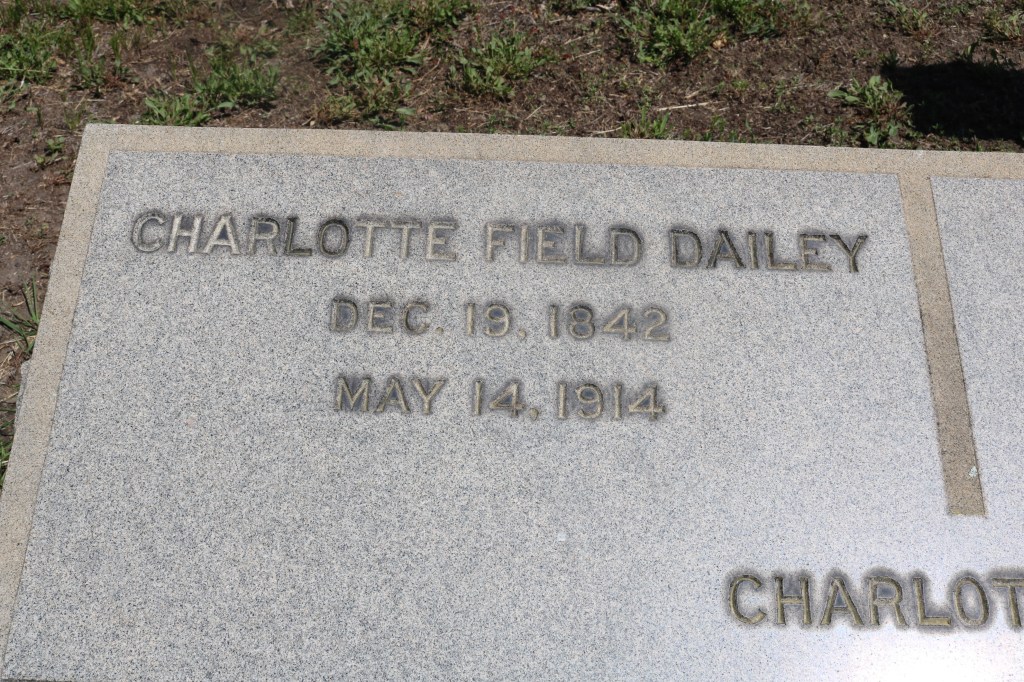
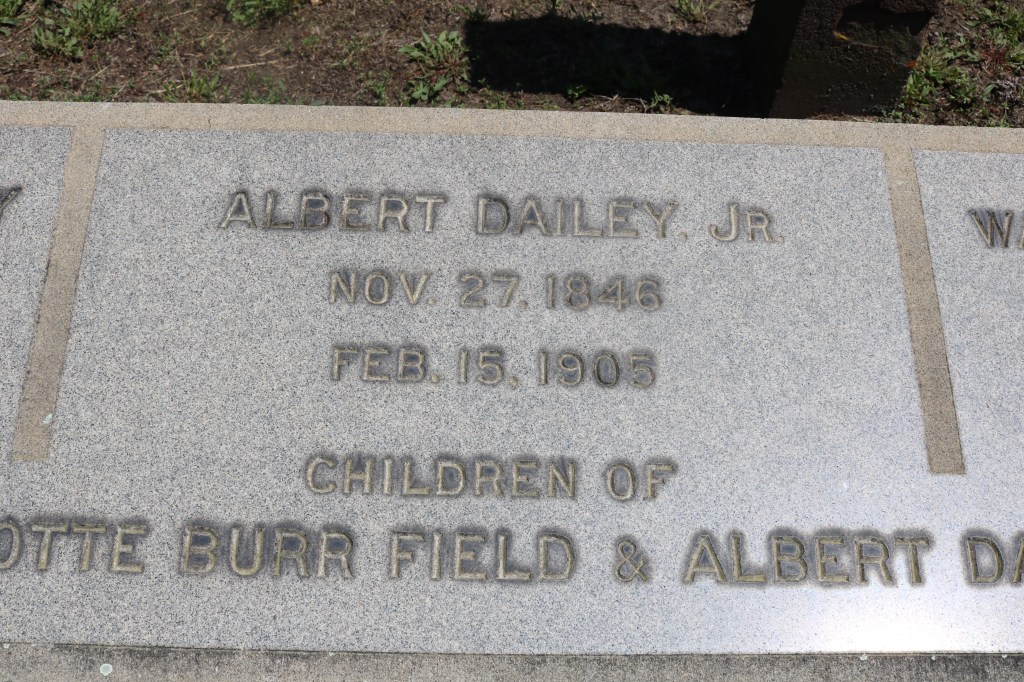
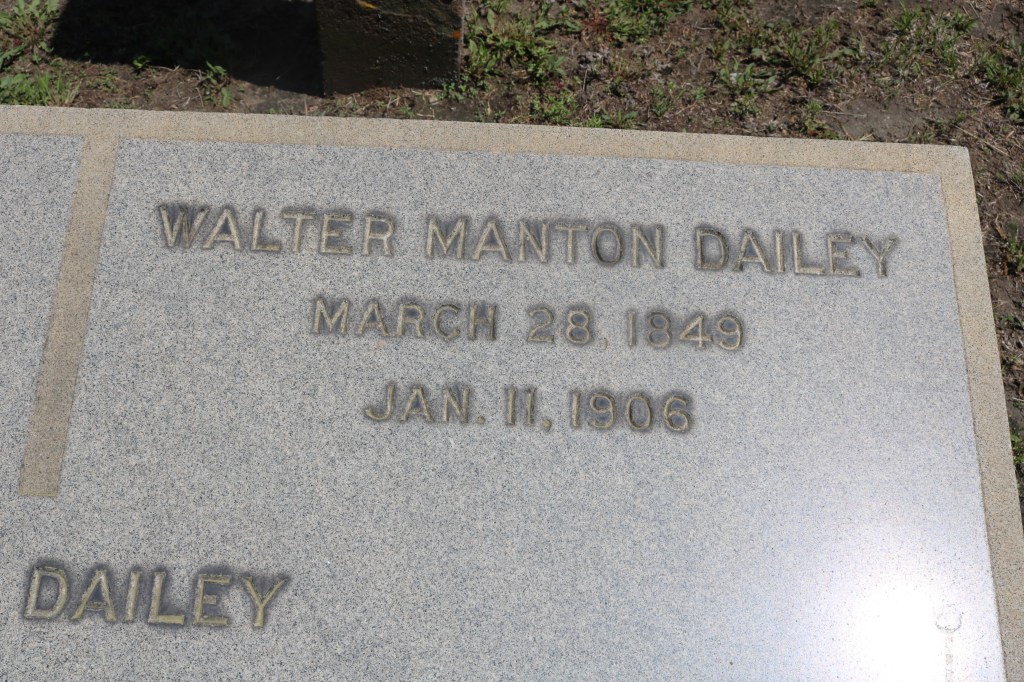
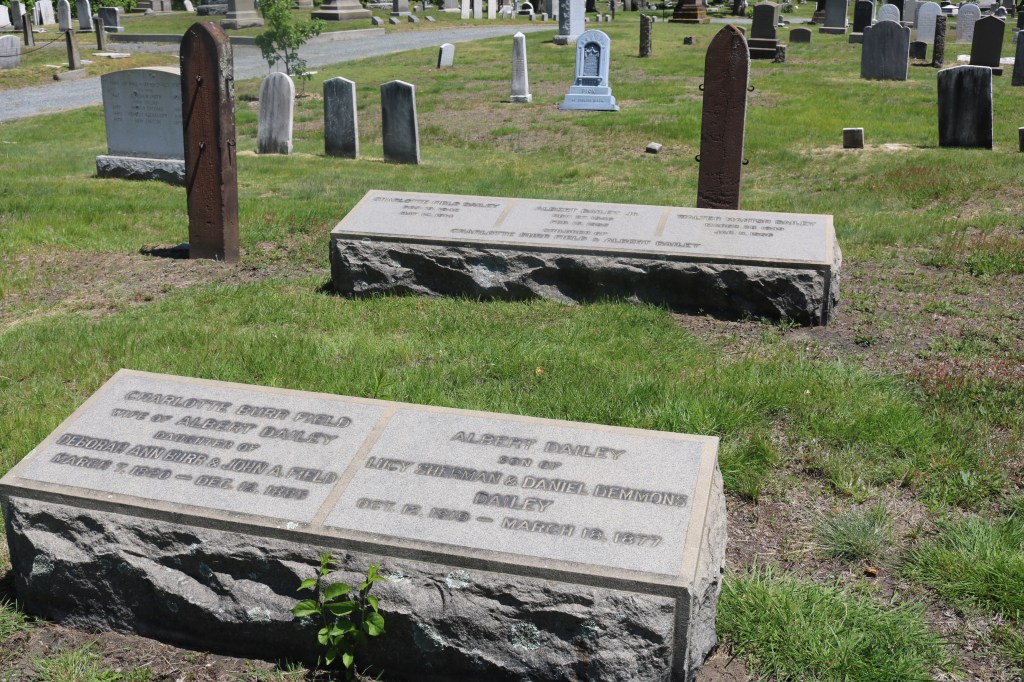
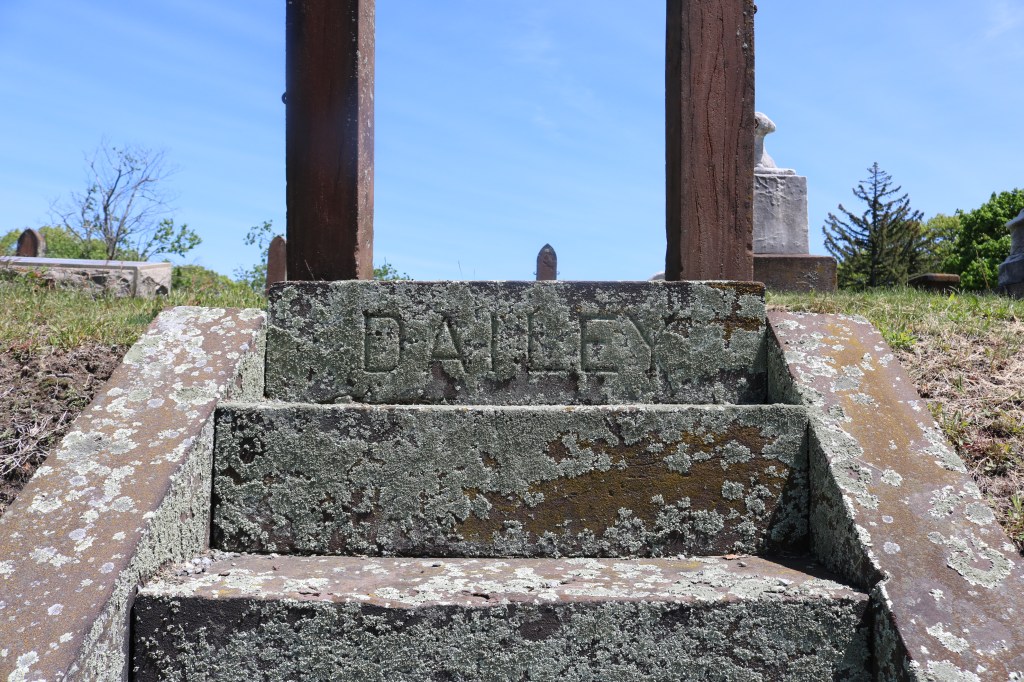
The Dailey family lot at the North Burial Ground. Photos by Levi L. Leland.
The Dailey family were an essential part of Sarah Helen Whitman’s final acts of life, her death, and her legacy. The family took Whitman into their home at 97 Bowen Street (today’s 133 Brown Street) in January 1878 and cared for her until her death five months later. Whitman’s friend, Charlotte Burr Field Dailey, was married to Albert Dailey. A little over a decade before Charlotte would take Whitman into her home, she was appointed by Governor Sprague in 1862 to care for the wounded Rhode Island Civil War soldiers and document their condition. Charlotte remained devoted to these injured and dying servicemen for the next year, returning home in 1863. There was no doubt that she was more than qualified to nurse Sarah Helen Whitman in her final months of life.
The Dailey’s daughters, Charlotte “Lottie” and Maude Dailey Chace, were especially attentive to their ailing houseguest. We have no information regarding their sons, Albert Jr. and Walter Manton Dailey, and the role they played (if any) in Whitman’s time at their home. It is likely that they were busy managing their late father’s lumber supply shop on Dyer Street in Providence.
Shortly after Whitman moved into the Dailey’s home, she wrote to her English correspondent, the aspiring Poe biographer, John Henry Ingram, “I am for the present in the beautiful home of the Dailey’s—sitting before a cheerful wood fire in an upper-room looking out on fields and meadows and pleasant gardens.”
Whitman had a generous room in the house with all of her statues and portraits decorated to her liking. She was free to take guests as she pleased and had complete liberty in the home. Lottie was fond of Whitman, devoting much of her time to her. She listened to Whitman recount her life and famous relationship with Edgar Allan Poe, whose portrait hung in Whitman’s room. Whitman would often gaze at the portrait as she recollected her time with him. Lottie aided Whitman in her correspondence, transcribing letters for her when she was too weak to write. The girls also assisted Whitman with compiling an edition of poetry that she planned to have published posthumously. The following year, Poems by Sarah Helen Whitman was published.
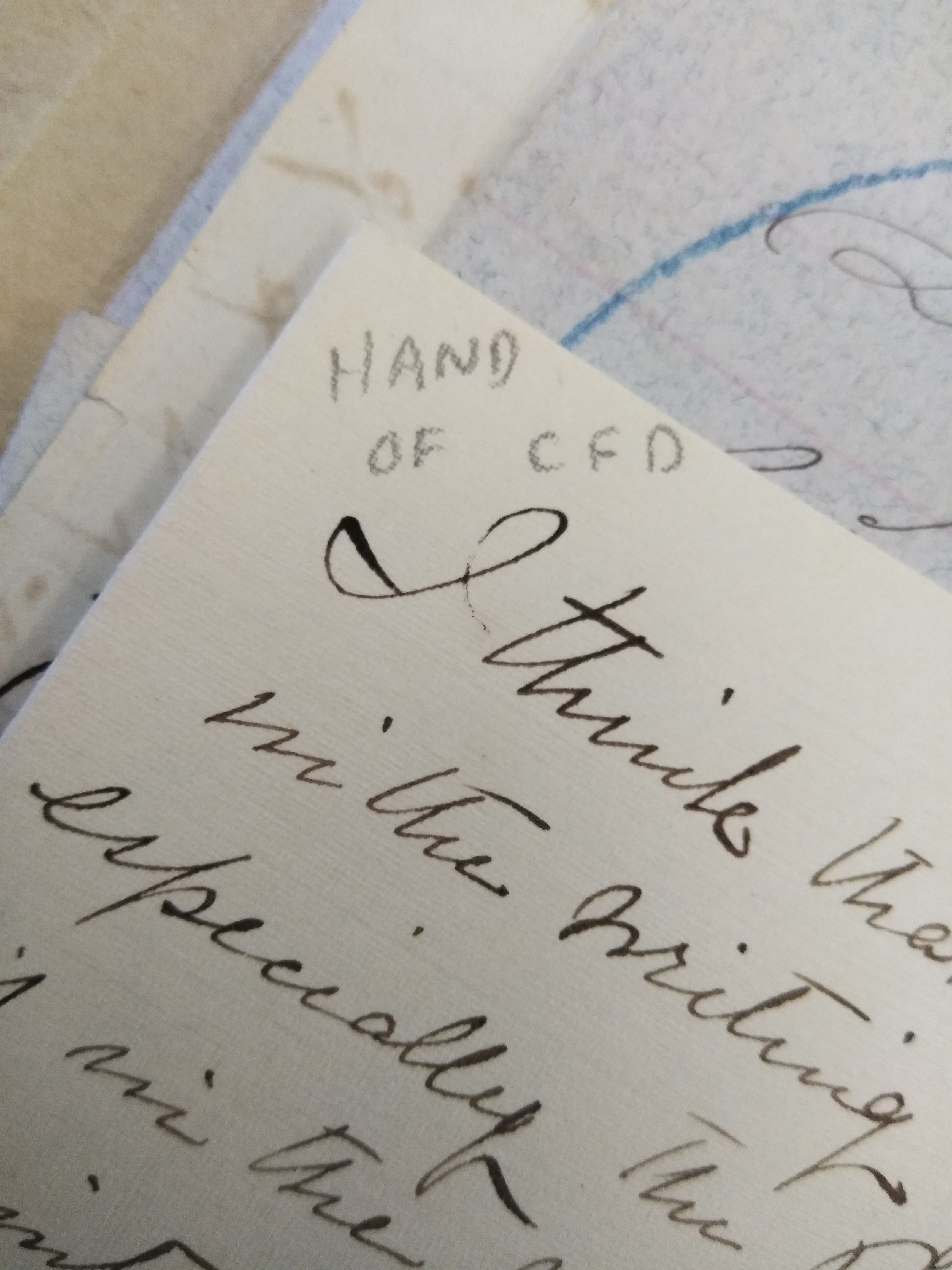
Among Whitman’s papers in the collection of Brown University at the John Hay Library, you will find penciled in small print at the top left corner of a number of Whitman’s manuscripts that read, “Hand of C F D,” exemplifying Charlotte “Lottie” Field Dailey’s transcriptions for Whitman. Whitman’s devotion to her correspondents, even during the final days of her life, attest to her tenacious character.
The Daileys became Whitman’s executors, handling all of her funeral arrangements and managing her estate after she died on June 27, 1878. Whitman left Lottie and Maude $2,500 each for their care and devotion to her during her final months of life.
The Dailey daughters served as essential resources for Caroline Ticknor as she was writing her 1916 biography of Sarah Helen Whitman titled Poe’s Helen. The Daileys provided her with countless materials, photos, and information that virtually wrote the book. Their handling of her estate and legacy had allowed fans and scholars to know more about Whitman over the centuries.
Maude and her daughter, Louise, also compiled a few scrapbooks containing articles and other information about Whitman. You can find those materials in the collection of Brown University at the John Hay Library. The Daileys are buried together at the North Burial Ground, while Maude is buried with her husband and children at Swan Point Cemetery.
You can read more about Whitman’s time at the Dailey home here, and more about Maude and her family here.
 Edgar Allan Poe: Rhode Island