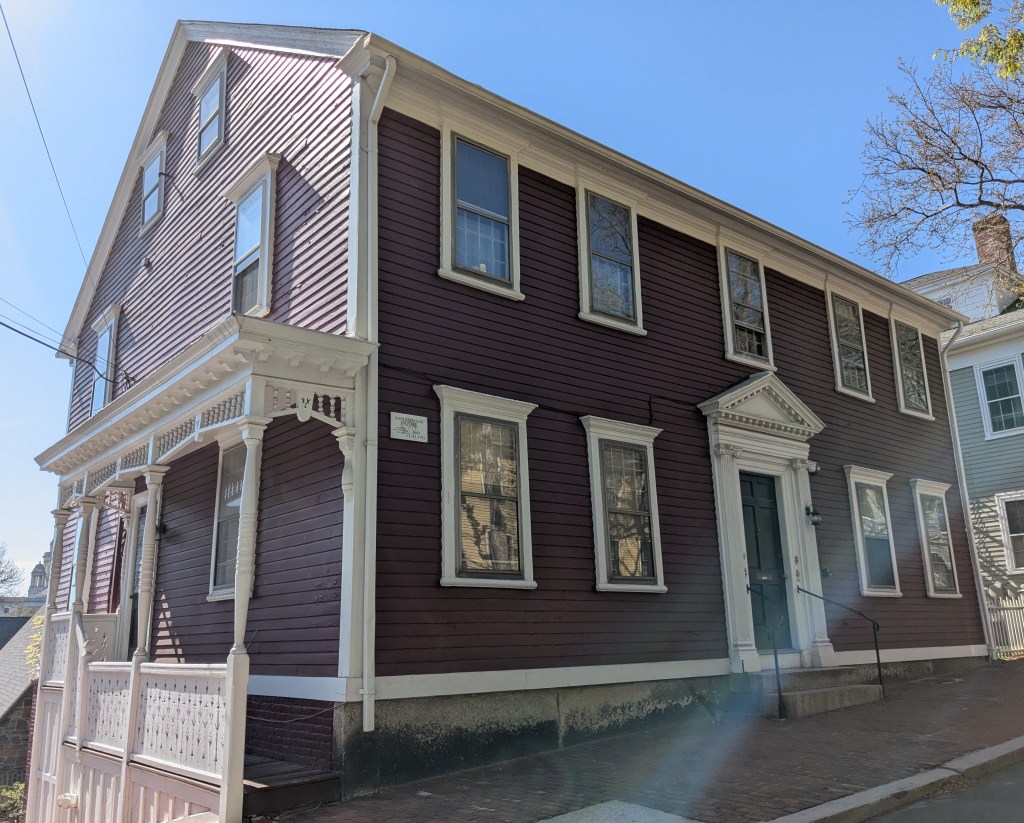
Built between 1783 and 1794, this house is on record as the Benjamin and John Reynolds house, after the original owners of the property. However, it is most commonly known today as the home of Sarah Helen Whitman. This house saw her courtship with Edgar Allan Poe in 1848, and is most famous for that aspect.
Sarah Helen Whitman spent the majority of her life in this home. The larger part of her literary output was written here. Her writing consisted of literary essays which covering feminism, transcendentalism, and spiritualism. She was also a critic and poet of some renown.
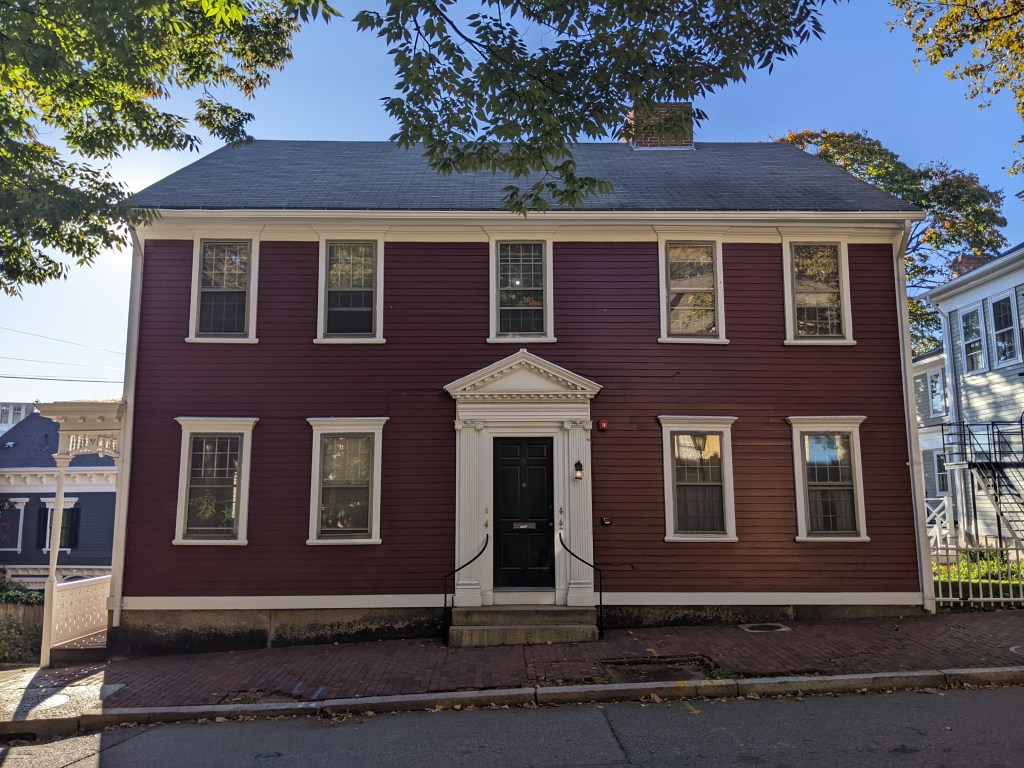
It was in 1816 when Whitman’s mother, Anna Power, rented the home from Edward and William Reynolds. They sold the property to Samuel Hamlin in 1822, who continued to operate it as a dwelling house. Samuel Hamlin was a pewterer by trade, and owned the property until 1867. Hamlin occupied the north half of the house with his family while renting out the south half to Anna Power and her young daughters. It served as a two family residence with a central hall, two interior chimneys, and five rooms. In 1824 it was numbered 50, in 1847 it was numbered 76, and in 1866 it was numbered 88, and today you can locate it by that number on Benefit Street.
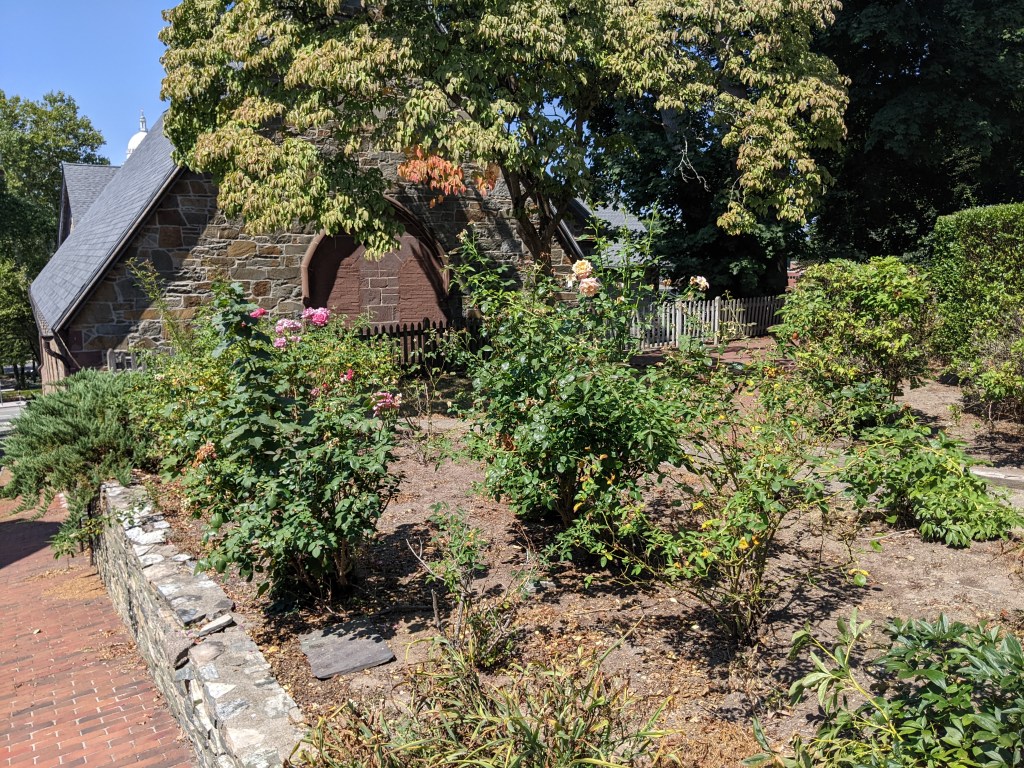
The house sits at the corner of Benefit and Church Street, overlooking St. John’s Cathedral and the adjoining graveyard. The house is hard to miss given its bold red exterior. Whitman herself remarked that she quite disliked the red color of the house, but the beauty of the interior woodwork made up for it. It is my estimation that each time the home was repainted, it stayed relatively close to the previous color.
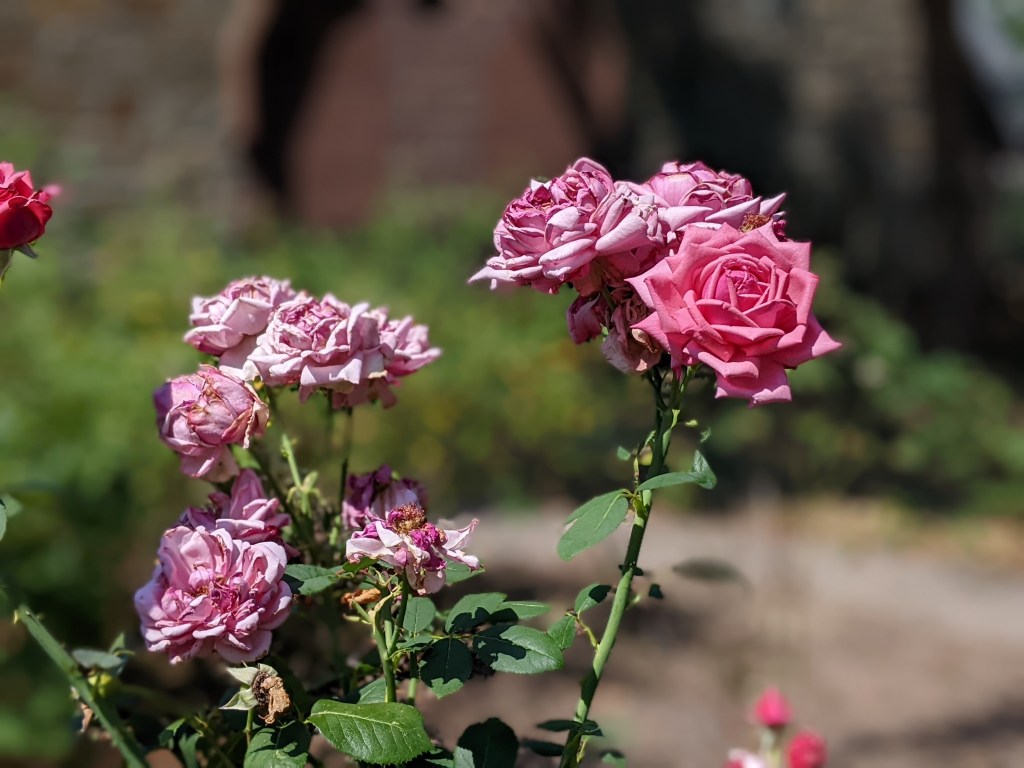
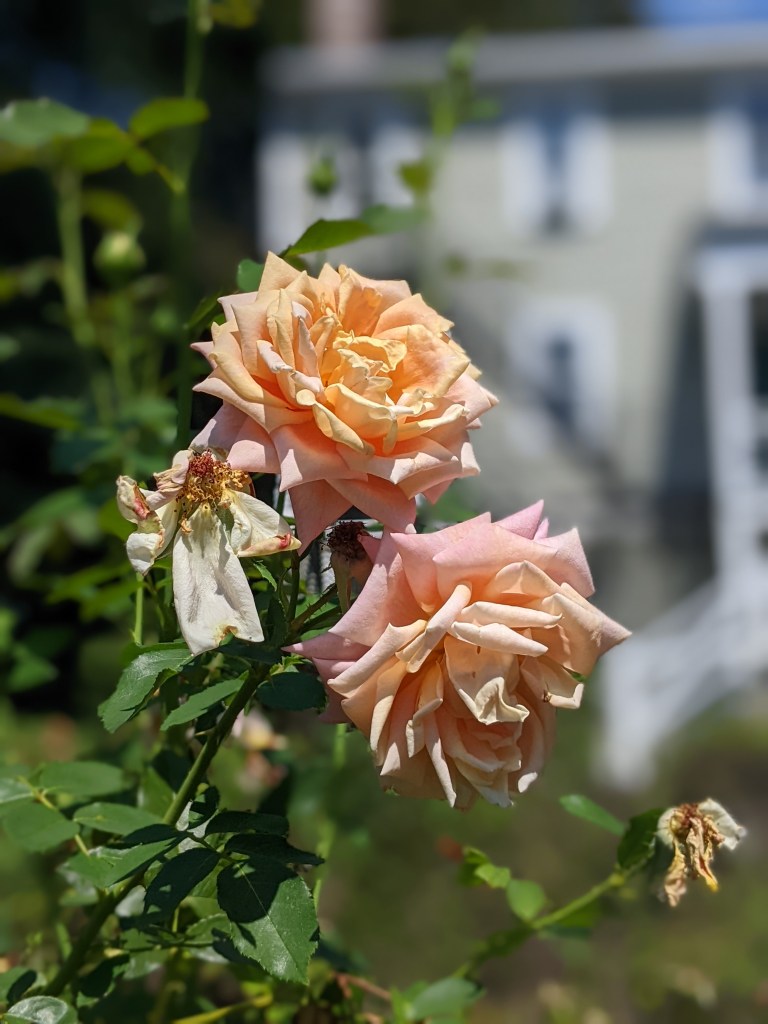
It was in the backyard of this house, in a rose garden, where Poe first laid eyes on Whitman under a full moon during a warm July night in 1845. This occurrence inspired his second titled poem, “To Helen.” In the poem, he calls the garden “Enchanted.” The roses that fill the backyard today are a symbol of that enduring and Enchanted garden which served as the most important moment of the Poe/Whitman romance in Providence. In September 1848, Poe called on Whitman at this house for their very first meeting—three years after he first saw her.
It was in this house that Anna Power urged her daughter to prepare a strong cup of coffee for Poe when he showed up in a panicked delirium after he sat for his infamous “Ultima Thule” daguerreotype. His distressed voice “rang through the house.” It was here that Poe gazed at Cephas Giovanni Thompson’s Oil Portrait of Sarah Helen Whitman as it hung in the parlor of the home. And finally, it was here that Poe pleaded with Whitman not to end their engagement as she pressed an ether-soaked handkerchief to her face, uttering one final “I love you” to Poe before slipping out of consciousness. She never saw him again.
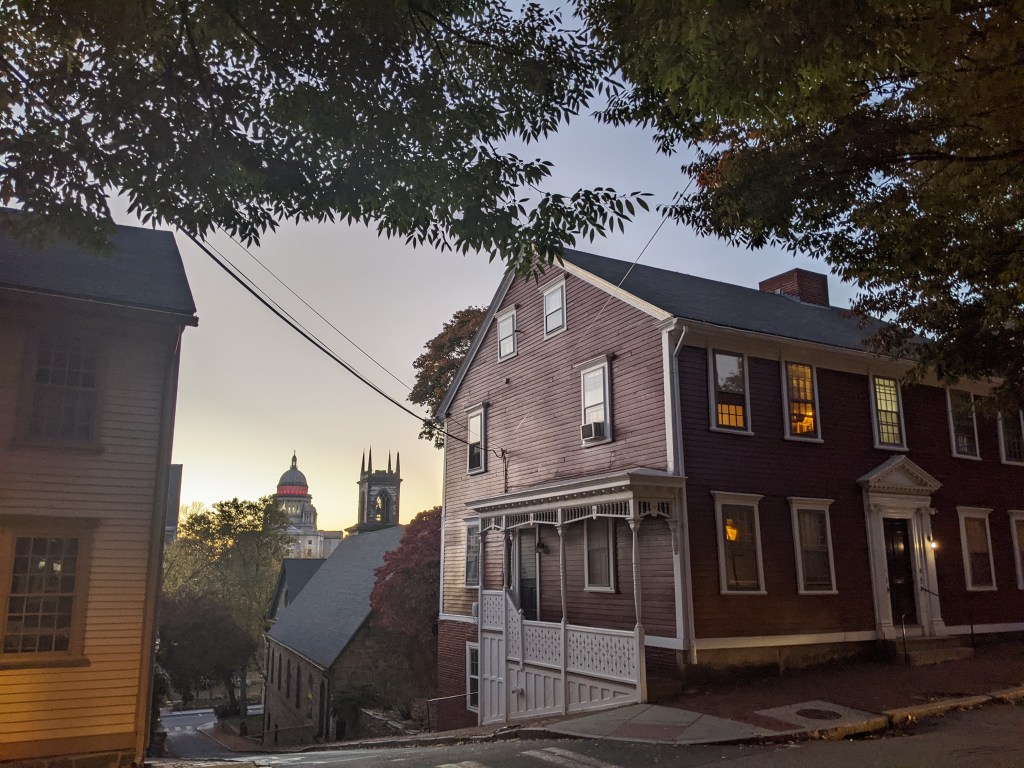
After Anna Power’s death in 1858, Whitman became her sister’s (who was mentally unwell) sole chaperone. In 1864, the Hamlin heirs sold the property, so Whitman and her sister were forced to move out of the home they knew for more than half their lives. They temporarily moved into a house on Wheaton Street (non-extant today) before moving into a house on Benevolent Street in 1866.
After Hamlin, the house passed through a few different owners before it was purchased by St. John’s church in 1920. The church utilized the house as a choir school until 1953 when it went under its most extensive renovation. It was subdivided into five apartment units with two on the second floor, two on the first floor, and one in the rear basement level. Today, those units are rented out to private residents. There is still some originality to the interior of the house, but much has changed since the days of Poe and Whitman.
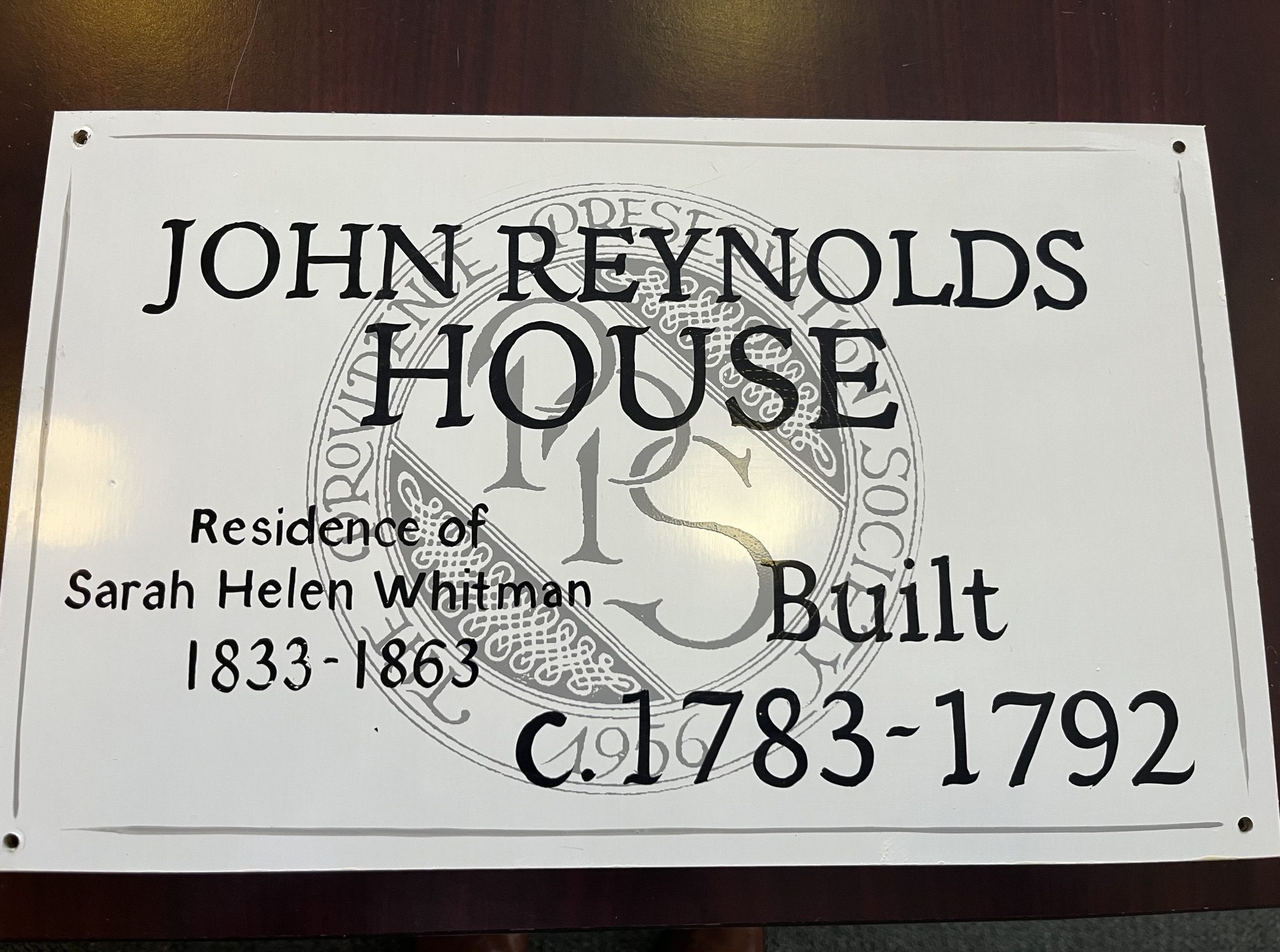
On April 23, 2025, a Providence Preservation Society plaque was installed on the house after many years of remaining unmarked. This came after I was able to personally meet with the property manager and appeal to have a plaque put on the home with mention of Sarah Helen Whitman’s residency. The PPS had recently made an amendment that allows more than just the names of the building’s first owner and/or architect. The program’s expansion opens eligibility to “buildings and sites of historical and cultural significance, recognizing that a building may not exist or exhibit architectural integrity but still hold incredible historical or cultural value through association with a person, group, or event.” This allowed Whitman’s name to be placed on the marker for her significance to the home.
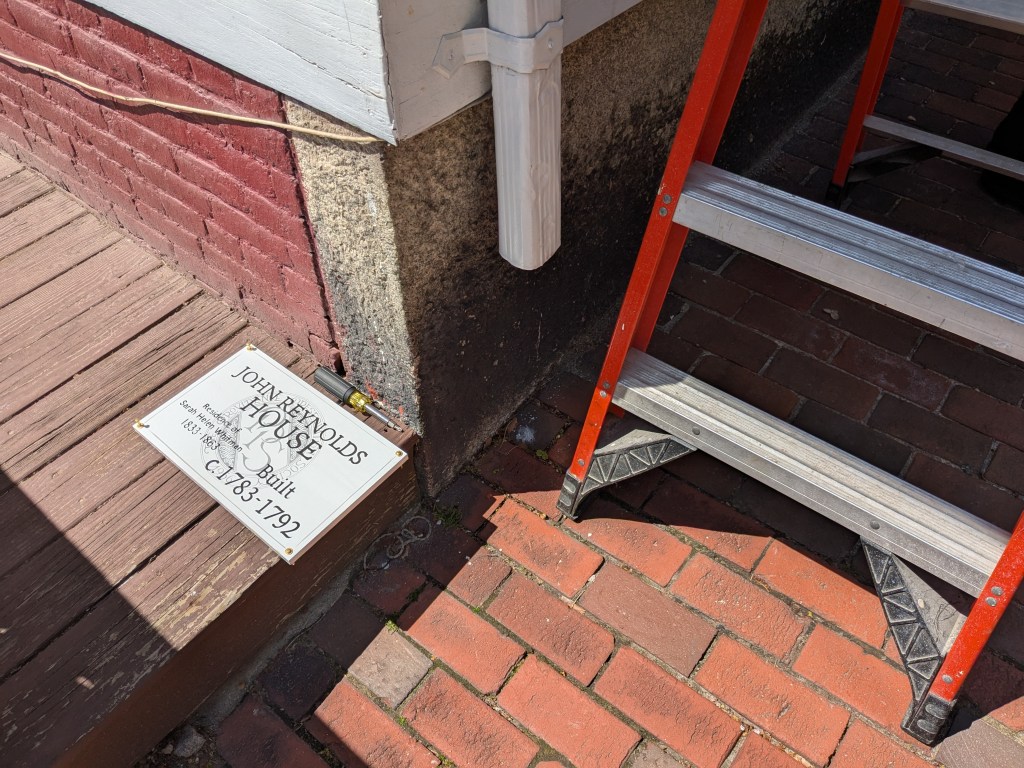
A small ceremony was held during the installation of the plaque. I was honored to share these words during the event: What a meaningful tribute to Sarah Helen Whitman! A remarkable yet often overlooked figure in Providence’s history, Whitman’s life and work is certainly overshadowed by her romance with Edgar Allan Poe, which took place here. She was a gifted poet, essayist, and one of America’s earliest female literary critics. She championed progressive causes and enriched the city’s cultural life. She was deeply devoted to Providence and used her voice to uplift its art, heritage, and social conscience. So today, we are also honoring her and her legacy—a woman who left Providence brighter and more inspired than she found it.
I followed with a reading of Whitman’s poem, “In April’s Dim and Showery Nights,” primarily because it was written while she was living in the house and was inspired by the very time of year we were celebrating the installment of the plaque. The poem reflects on the fleeting beauty of spring, evoking memory, mourning, and above all, hope.
St. John’s Cathedral
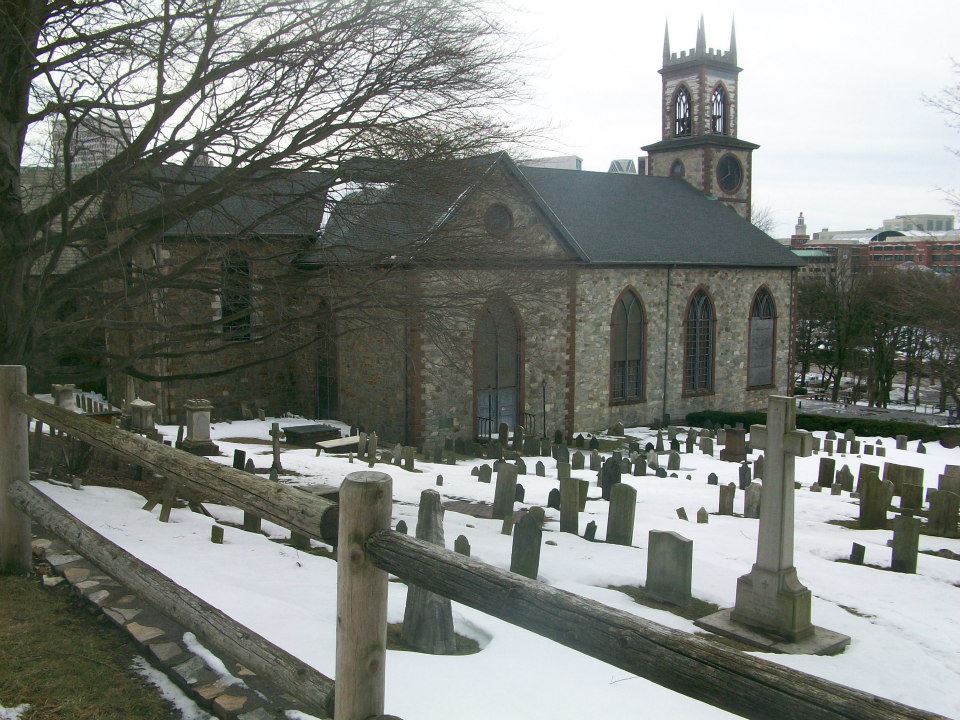
It is speculated that St. John’s graveyard was a frequent meeting spot for Poe and Whitman during their courtship. While it would have certainly been convenient considering its close proximity to Whitman’s home, it is very unlikely that this is where they would have chosen to spend their time. Anna Power’s disapproving glare from the windows of the house overlooking the graveyard would have certainly made the couple very uncomfortable, hindering any privacy that they desperately wished to have. It is more likely that Poe and Whitman frequented Swan Point Cemetery since Whitman specifically mentions Swan Point in her sonnets about Poe written in the years after their romance. While it is plausible that the couple spent time at St. John’s graveyard, we know for certain that St. John’s Cathedral was set to be the location of their wedding. The minister Dr. Crocker was to conduct the ceremony on December 25, 1848. Of course that ceremony never took place after Whitman called off the wedding just two days before it was to take place.
 Edgar Allan Poe: Rhode Island