Susan Hammond Barney (1834-1922) was born in Pawtucket to the prominent physician Dr. John Allen Hammond and his wife, Elisa Brown Hammond. At thirteen years old, Susan’s writing was good enough to be published in the local paper. She married Josiah Barney in 1854 and moved from Pawtucket to Providence. They had two children, Walter (1855) and Charles (1858).
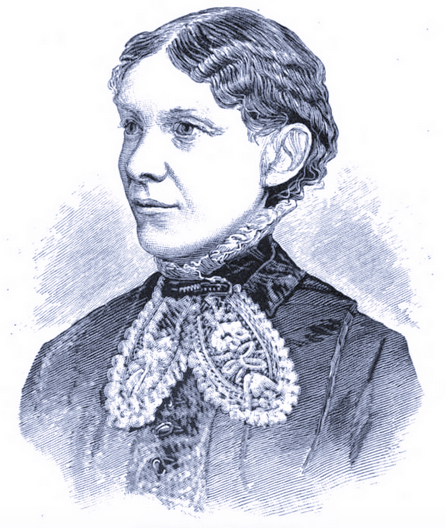
Barney was an American evangelist who aspired to be a foreign Christian missionary, but ill-health and discouragement from friends dissuaded her. However, she was involved with the Women’s Foreign Missionary Society which allowed her to pursue the work in a different way. She was partly responsible for making prohibition a constitutional enactment in Rhode Island in 1886 during her tenure as the first president of the Women’s Christian Temperance Union.
It comes as no surprise that Barney was Sarah Helen Whitman’s friend, as Whitman was associated with many of Providence’s activists. On September 22, 1848, one day into her courtship with Poe, Whitman hosted friends at her home. Barney was among those friends, and she recalled this peculiar moment which occurred at the party:
Poe and Mrs. Whitman sat across the room from each other. All were drawn toward Poe, whose eyes were gleaming and whose utterance was most eloquent. His eyes were fixed on Mrs. Whitman. Of a sudden, the company perceived that Poe and Helen were greatly agitated. Simultaneously both arose from their chairs and walked toward the center of the room. Meeting, he held her in his arms, kissed her; they stood for a moment, then he led her to her seat. There was a dead silence through all this strange proceeding.
Barney’s most notable achievements were those in her police, prison, charitable, and reformatory work. She founded the Prisoners’ Aid Society of Rhode Island, which was part of a larger movement expanding the state’s social welfare programs. Serving as the Woman’s Christian Temperance Union’s National Superintendent of Prison, Jail, Police, and Almshouse Visitation, she called for female matrons (basically correctional officers), dedicated cells for women prisoners, and the supervised release of non-violent offenders (formative ideas leading to the modern-day parole system). In 1897, she began a lecture tour in the South Pacific, visiting prisons and asylums to speak on prison reform. Her work earned her the title “The Prisoner’s Friend.” After a life of reform, charity, and faith, Barney died in Providence on April 29, 1922. She is buried in Riverside Cemetery in Pawtucket with her husband and children.
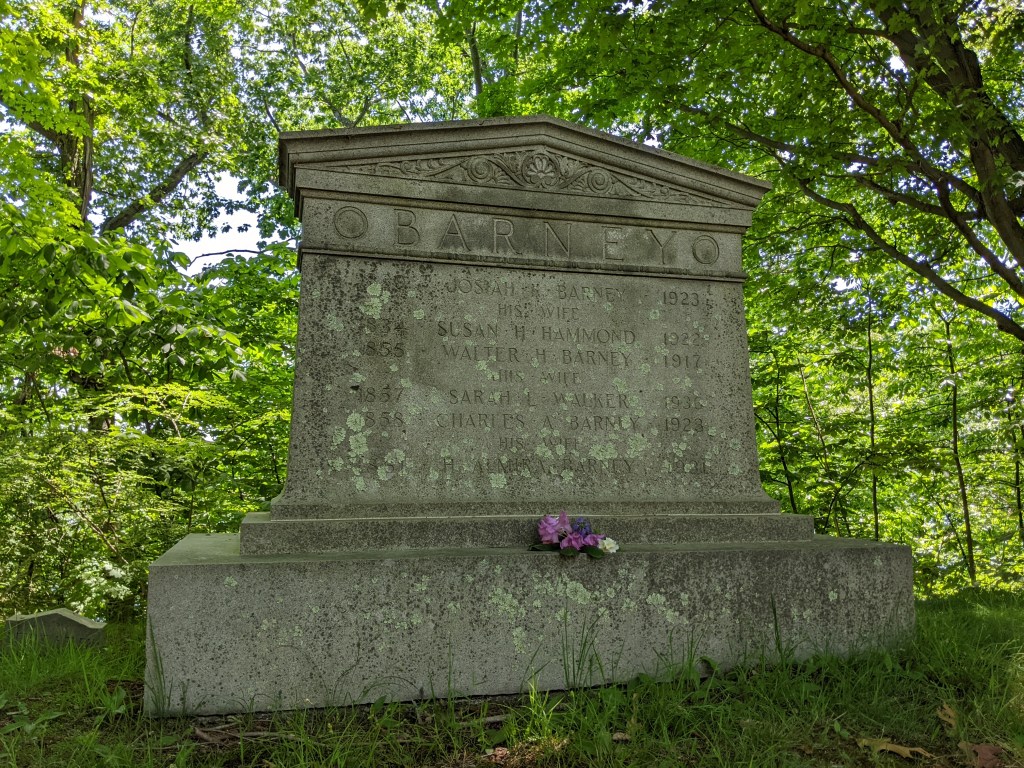
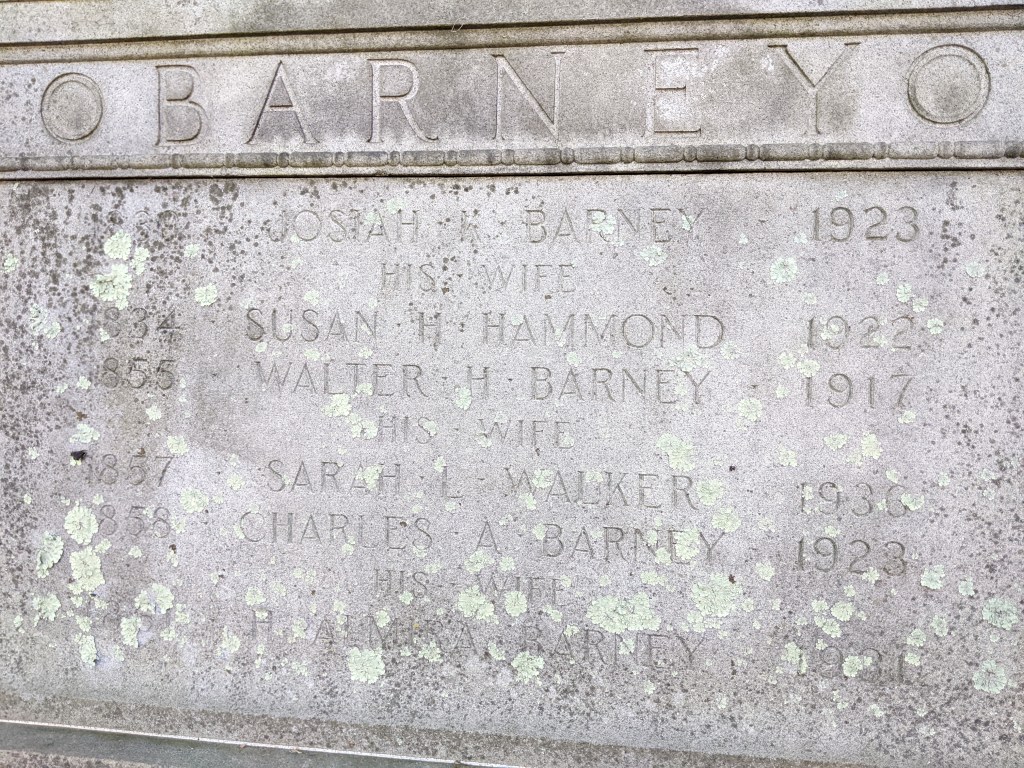
Barney’s grave at Riverside Cemetery in Pawtucket, Rhode Island. Previously unphotographed and unpublished online. Photos by Leland.
 Edgar Allan Poe: Rhode Island