Within the quiet walls of a small Dutch cottage in Fordham, New York, Virginia Clemm Poe passed away after a courageous, years‑long battle with tuberculosis. Her loving husband and mother were devotedly at her side on that bleak winter day, January 30, 1847. Edgar Allan Poe never fully recovered from the loss of his beloved wife, following her to the grave only two years later. Many women spoke of Edgar Allan Poe, and of all those voices, Virginia’s was by far the most important—yet, it remains the least heard.
Virginia Eliza Clemm was born on August 15, 1822, in Baltimore, Maryland. She was named after her older sister, Virginia Marie Clemm, who died in infancy. Her father, William Clemm Jr., was a hardware merchant, and her mother, Maria Poe Clemm, was the paternal aunt of Edgar Allan Poe.
Virginia first came to know her cousin and future husband when he moved into her Baltimore home on Wilks Street in the spring of 1831. The household consisted of her widowed mother Maria, her grandmother Elizabeth Cairnes Poe, her brother Henry, and her cousin William Poe (Edgar’s older brother, who died shortly after Edgar moved in). The family survived primarily on Elizabeth Poe’s pension, awarded for her husband’s service in the Revolutionary War. Maria sometimes took in boarders for extra income, but in desperate times she would walk Virginia through Baltimore’s busy streets with a donation basket. The little doe‑eyed girl often won the hearts—and coins—of passersby. When Edgar joined the household, his writing contributed a very small addition to the family’s income.
Virginia was described as a bright, happy child with a sweet disposition. She was radiant and musically talented, with dark, luminous eyes and deep brown hair. Over time, she grew attached to her new housemate, her older cousin “Eddy.” She followed him about, organized his manuscripts, and even delivered love letters between him and a neighbor, Mary Devereaux (later known as Mary Starr).
In 1833, the family moved into a tiny row house on Amity Street. There, the grandmother, who was paralytic and declining, took her last breath in 1835. Because the family relied so heavily on her pension, her death was a tremendous financial blow, one that permanently altered their lives. Henry set sail and was never seen, heard from, or spoken of again, likely having died at sea. This left only Edgar, Maria, and Virginia—the trinity that would one day rest together beneath a grave monument in the hollowed grounds of Westminster Burial Grounds. Edgar soon left for work in Richmond, Virginia, temporarily leaving Maria and Virginia behind in Baltimore.
Just weeks after Virginia’s thirteenth birthday, on August 29, 1835, Edgar penned an intensely emotional letter to Maria after another cousin, Neilson Poe, offered to take Virginia into his home for support. When Maria relayed this prospect to Edgar, it provoked a deeply sorrowful response:
My dearest Aunty,
I am blinded with tears while writing this letter—I have no wish to live another hour. Amid sorrow, and the deepest anxiety your letter reached—and you well know how little I am able to bear up under the pressure of grief. My bitterest enemy would pity me could he now read my heart. My last—my last—my only hold on life is cruelly torn away—I have no desire to live and will not. But let my duty be done. I love—you know I love Virginia passionately, devotedly. I cannot express in words the fervent devotion I feel towards my dear little cousin—my own darling. (…) The tone of your letter wounds me to the soul—Oh Aunty, aunty, you loved me once—how can you be so cruel now? You speak of Virginia acquiring accomplishments and entering into society—you speak in so worldly a tone. Are you sure she would be more happy? Do you think anyone could love her more dearly than I? She will have far—very far—better opportunities of entering into society here than with N. P. [Neilson Poe]. Everyone here receives me with open arms. Adieu, my dear aunty. I cannot advise you. Ask Virginia. Leave it to her. Let me have, under her own hand, a letter bidding me goodbye—forever—and I may die—my heart will break—but I will say no more.
The nature of Edgar and Virginia’s relationship has long been debated by scholars, but they would indeed marry shortly after this letter was written. The city of Baltimore issued a marriage license on September 22, 1835. Edgar was twenty‑seven years old; Virginia was thirteen. Maria supported—if not encouraged—the union. While there is debate over whether a secret ceremony took place at this time, an official wedding occurred on May 16, 1836.
The ceremony was held at the boarding house where Edgar, Virginia, and Maria were living in Richmond, Virginia. Edgar’s employer, Thomas White of the Southern Literary Messenger, and his daughter Eliza were among the few in attendance. A Presbyterian minister, Amasa Converse, officiated. The marriage certificate listed Virginia’s age as twenty‑one, a lie necessitated by the fact that, at thirteen, she required her father’s consent. As her father was deceased, her age was falsified.
Following the ceremony, a wedding meal and cake were prepared by Maria and the boarding house owner, Mrs. Yarrington. The couple honeymooned the next day in Petersburg at the Hiram Haines coffee house and hotel. Hiram Haines later offered them a pet fawn as a wedding gift, which Edgar politely declined due to the difficulty of transporting it home. Virginia was a devoted animal lover, as was her husband. They shared their home with a cat named Catterina, who would perch nearby while Edgar played the flute and Virginia sang and played the piano. They spent hours in the garden, Edgar climbing cherry trees and tossing fruit down to Virginia, who caught it eagerly in her apron. Maria baked pies from their harvest, and the family enjoyed these simple moments together. On one occasion, during a game of leapfrog, Edgar humorously split his trousers, sending Virginia into uncontrollable laughter.
The little Poe family remained perfect and happy until 1842—the year Virginia exhibited the first signs of consumption, a disease Edgar knew all too well. This marked the beginning of the end.
Despite their poverty, Edgar ensured Virginia enjoyed the comforts she loved most. Music was her passion, and he paid for instruments and lessons. One day, while Virginia sang at the piano, a coughing fit interrupted her song, blood spotting the handkerchief she pressed to her mouth. In a letter dated February 3, 1842, Edgar wrote to a friend:
My dear little wife has been dangerously ill. About a fortnight since, in singing, she ruptured a blood‑vessel, and it was only on yesterday that the physicians gave me any hope of her recovery. You might imagine the agony I have suffered, for you know how devotedly I love her. But today the prospect brightens, and I trust that this bitter cup of misery will not be my portion.
Virginia’s condition only worsened with time. By February 14, 1846, the couple likely knew it would be their last Valentine’s Day together—and it was. The only authenticated writing we have from Virginia is an acrostic Valentine poem she composed for Edgar, his name spelled down the margin. It remains one of the most tender tributes ever written to him:
Ever with thee I wish to roam—
Dearest, my life is thine.
Give me a cottage for my home
And a rich old cypress vine,
Removed from the world with its sin and care
And the tattling of many tongues.
Love alone shall guide us when we are there—
Love shall heal my weakened lungs;
And oh, the tranquil hours we’ll spend,
Never wishing that others may see!
Perfect ease we’ll enjoy, without thinking to lend
Ourselves to the world and its glee—
Ever peaceful and blissful we’ll be.
To escape the “tattling tongues” of the literati and to provide Virginia with a “cottage for [her] home,” Edgar moved the family in 1846 to a small Dutch farm cottage in Fordham, New York. Physicians believed the fresh air might ease her symptoms. They rented the cottage from John Valentine for $100 a year. Their finances were dire. At times, their cat Catterina served as Virginia’s primary source of warmth, lying across her chest, with Edgar’s old military frock coat as a secondary comfort.
The day before Virginia’s death, Edgar wrote to their friend and nurse, Marie Louise Shew: “My poor Virginia still lives, although failing fast and now suffering much pain.” That evening, Mary Starr—Edgar’s former romantic interest—visited the cottage. As Virginia sat in a large armchair, Edgar at her side, she placed Mary’s hand into his and asked her to be a friend to him, saying that “he always loved you.” Even at the end of her life, Virginia was selflessly concerned for her husband’s welfare.
Virginia died at twenty‑four. A post‑mortem watercolor portrait by an unknown artist remains the only authenticated image of her. Mary Starr and Marie Shew paid for Virginia’s coffin, burial clothes, and Edgar’s mourning attire. The funeral was held at the cottage three days later, and Virginia was interred in their landlord’s (John Valentine) family vault. Days later, Edgar scratched out this couplet:
Deep in earth my love is lying
And I must weep alone.
Neighbors recalled seeing Edgar at all hours, weeping at Virginia’s grave and keeping it adorned with fresh flowers.
In 1883, Fordham Cemetery was razed, its graves exhumed and unclaimed remains tossed into a mass grave. Virginia’s bones nearly met this fate. John Valentine recovered her remains and contacted William Gill, an early Poe biographer living in the city. Gill kept Virginia’s bones in a box beneath his bed for two years, often showing them off to guests as the bones of “Annabel Lee.” Eventually, he wrote to Neilson Poe to arrange for her reinterment with Edgar and Maria beneath the monument at Westminster Burial Grounds.
On January 19, 1885—the seventy‑sixth anniversary of Edgar Allan Poe’s birth—Virginia’s remains were placed in a small bronze casket and interred beside her husband and mother. At last, the little family who had struggled, laughed, loved, and endured life’s fiercest storms together was reunited for eternity.
Rest in peace, Virginia.
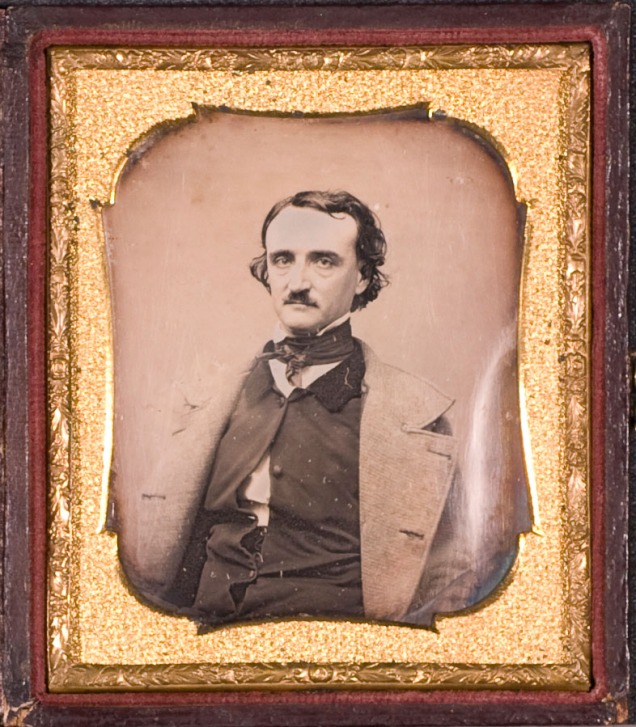


 Edgar Allan Poe: Rhode Island