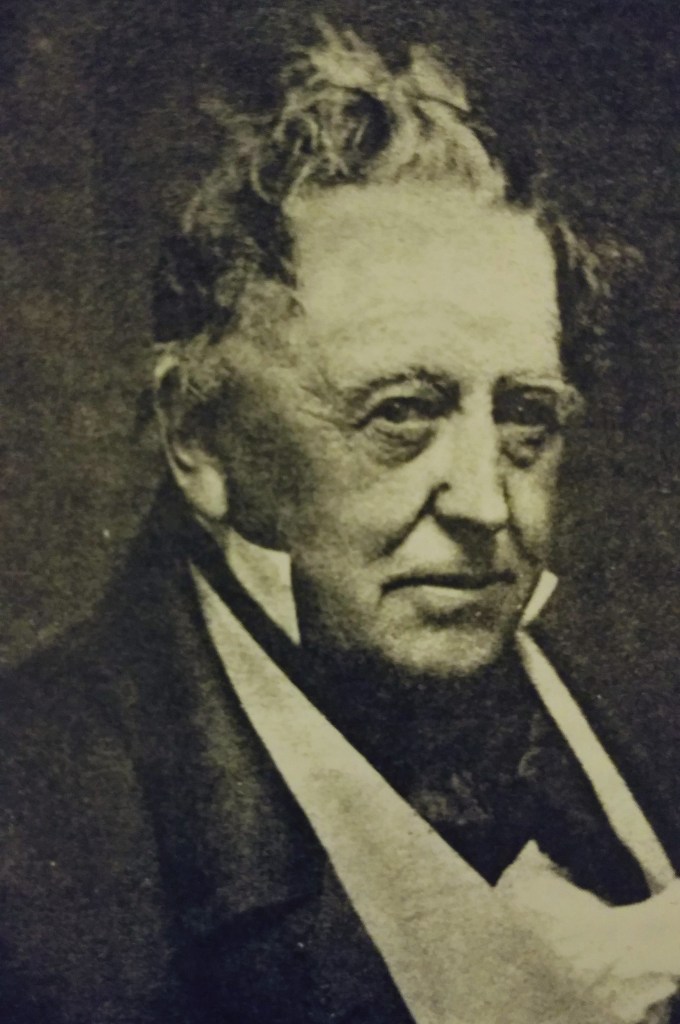
Wilkins Updike (1784-1867) was born in North Kingstown, Rhode Island on January 8, 1784. Updike was one of the last generations of Rhode Island men known as “old fashioned.” He was well educated, well liked, and respected by everyone who knew him.
Updike was not only a lawyer, but a lawmaker, taking part in legislation that included the Married Woman’s Act and the System of Public Schools. He was a proponent of Temperance, a member of the Rhode Island Historical Society, and a writer of some renown. He published Memoirs of the Rhode Island Bar in 1842 and History of the Episcopal Church in Narragansett, Rhode Island in 1847. He was a role model for many, but especially his twelve children that he had with his wife, Abby Watson, between 1809 and 1826. Sadly, Abby passed away in 1843, and in the following years, Updike began his quest for a new wife.
In 1845, Updike met Sarah Helen Whitman through mutual friends and he immediately became enamored by her, expressing a fervent desire to marry her. However, Whitman was quite content on being nothing more than platonic friends. Unsatisfied by this, Updike persisted. He wrote to her in April 1845 regarding her rejection to his proposal: “I ask myself why it cannot be so in reality. I feel as if it will one day be so and must be. I don’t know but that I am too sanguine and confident, but can all my aspirations be defeated? I feel as if I could not live without you—The impression my dear Sarah has made cannot be obliterated.” He continues: “It is necessary to my existence to be in your presence. I want to talk everything over. I cannot be made to believe that all your objections cannot be removed.” Updike closes the letter: “I am here alone and the enjoyment of the consummation supports me. You will be with me. It will be so.”
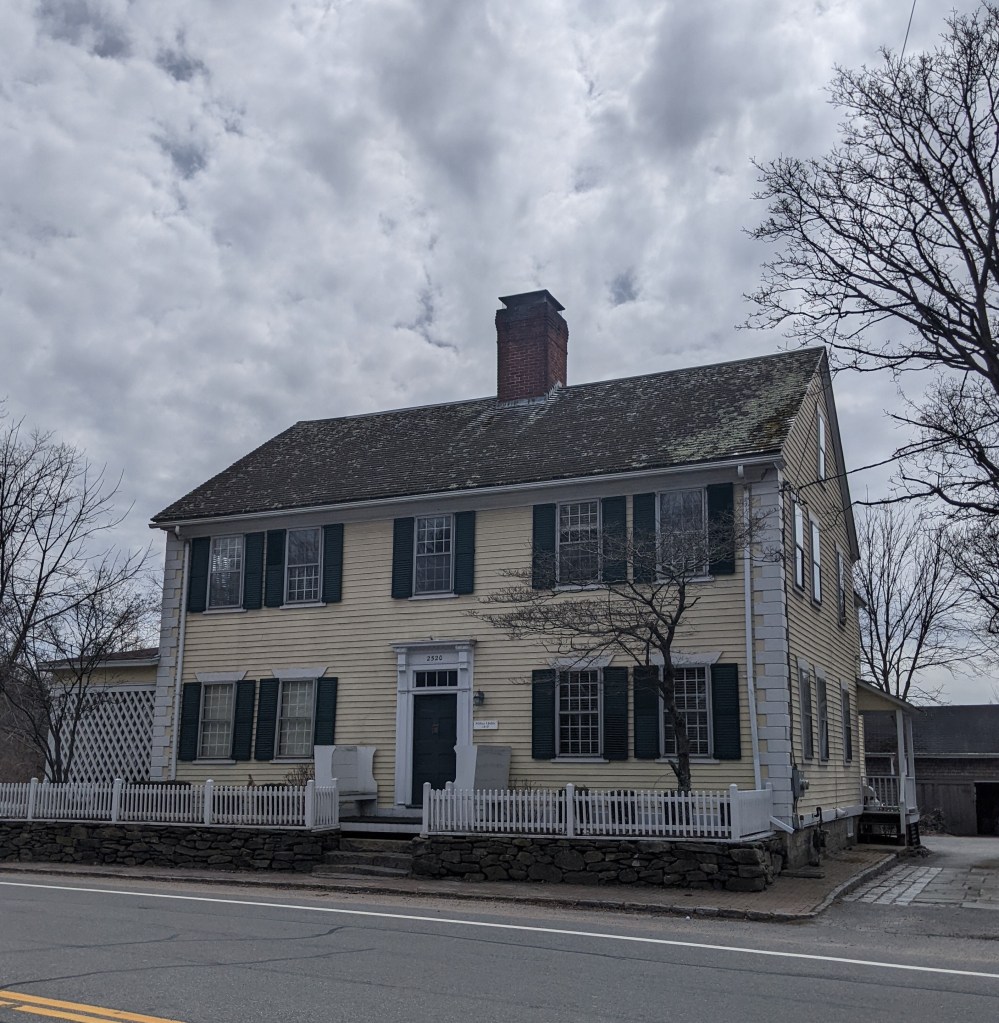
Whitman was not a woman to be persuaded so easily by anyone, especially a man. She had expressed her disinterest in Updike to the same mutual friends that brought them together. When Updike caught wind of this, he wrote to her again, begging her to change her mind. These efforts did nothing to sway her. Whitman maintained a friendship with Updike despite his intense romantic pursuit. She visited his home in Kingston on a few occasions where they would go riding down to the beaches. In July of 1845 (ironically the exact time that Poe had first laid his eyes on Whitman in her garden during his first visit to Providence), Updike had invited Whitman to stay at his home with grave concern for her health. He had hoped that the cool ocean air would give her respite during the intense heat of the summer. She declined his invitation.

Updike eventually gave up on his desperate perusal of Whitman’s hand, but the two continued a friendship thereafter. We can only imagine Updike’s frustration when Whitman became engaged to Edgar Allan Poe just a few years later. Of course that union never came to be, but Poe was closer than any other man to marrying Whitman after the death of her husband.
Updike died at his home in Kingston on January 14, 1867. He is buried in Saint Paul-Updike Cemetery in North Kingstown, Rhode Island.
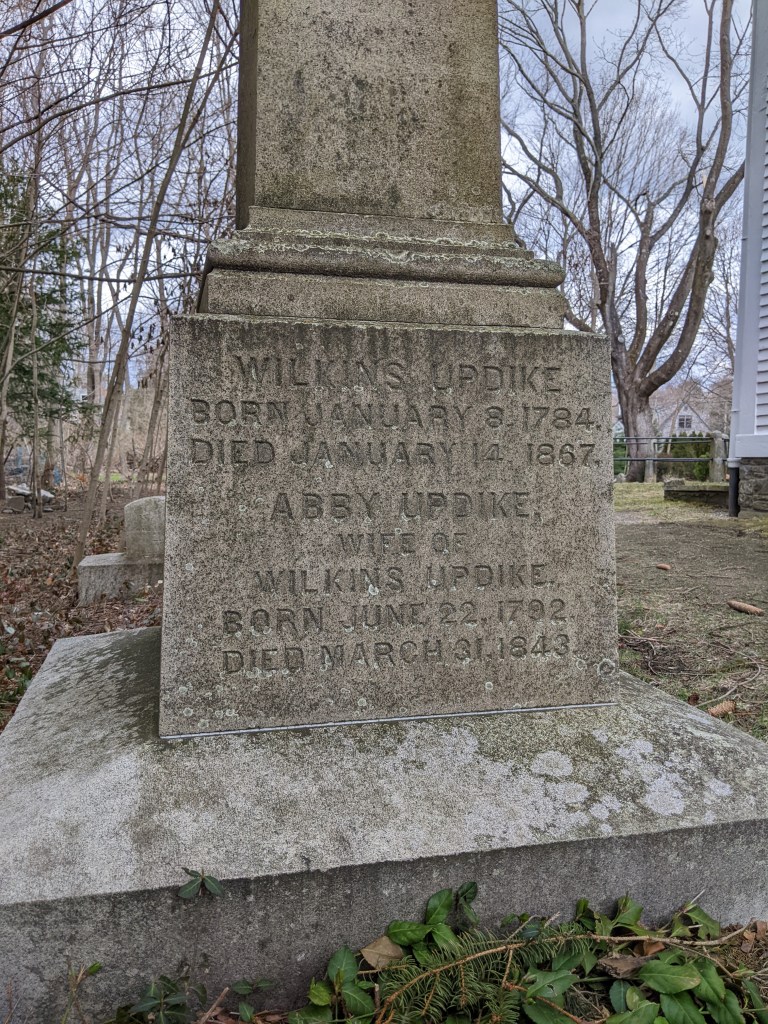
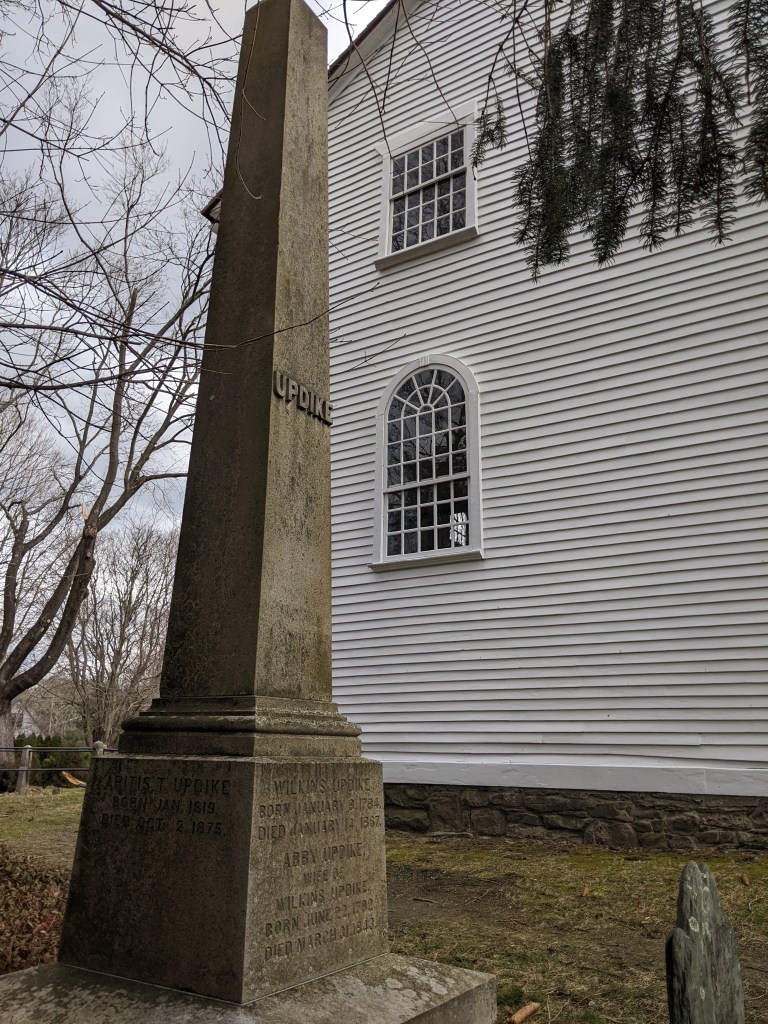
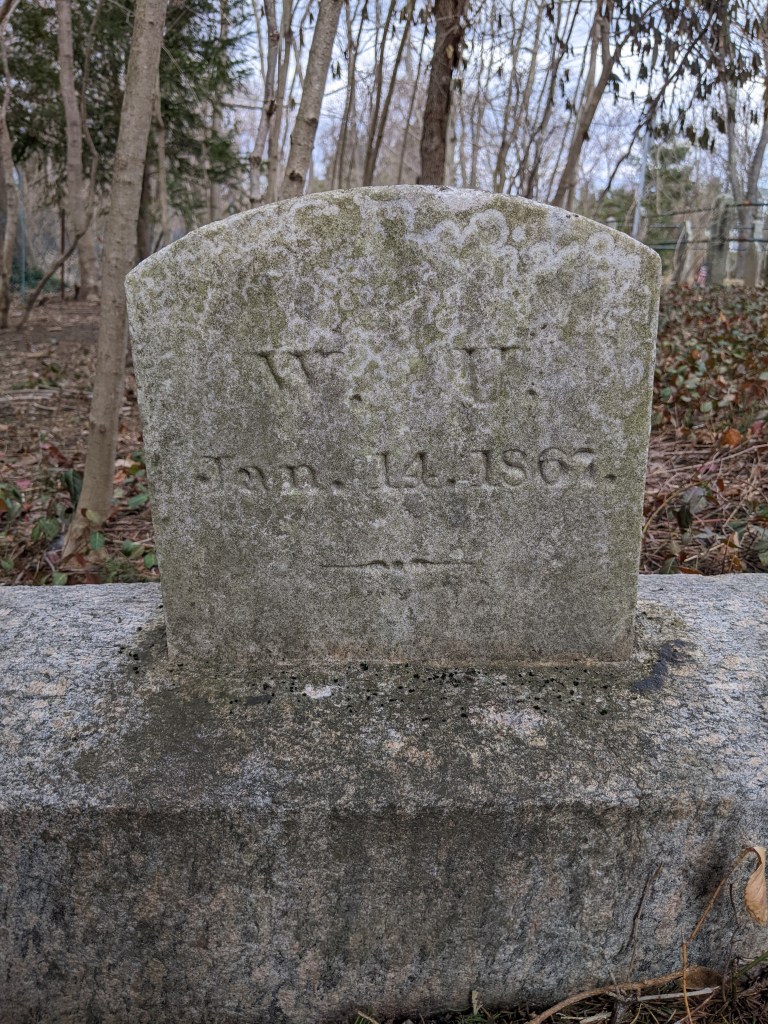
The grave of Wilkins Updike at Saint Paul-Updike Cemetery. Photo by Levi L. Leland.
 Edgar Allan Poe: Rhode Island