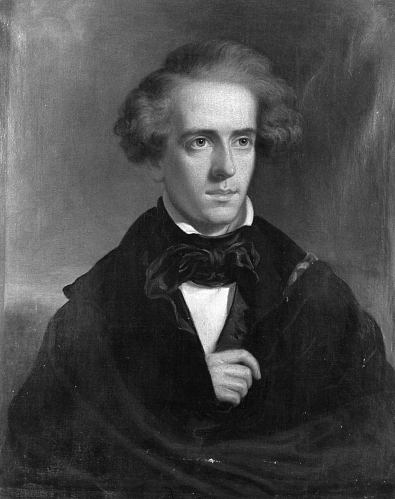
William Jewett Pabodie (1813-1870) was born in Providence, Rhode Island and made the city his home for the duration of his life. Pabodie was described as mildly intellectual, but scholarly. In his later years, he colored his hair with black dye and carried the look of an “opium eater.” His personality was said to be as colorless as his person.
Pabodie was admitted to the bar in 1837 and was listed in Providence directories as “attorney,” with an office located at 4 College Street. Much like Poe, Pabodie was an aspiring poet with prospects of starting his own literary magazine. He was rejected by the literati, never reaching the literary acclaim that he aspired to. However, some of Pabodie’s poems made it into Griswold’s Poets and Poetry of America anthology, which was an achievement of some significance. Among Pabodie’s other published work was his piece titled Calidore: A Poem, which was printed in book-form and read at Brown University’s 1839 commencement. Later printings of this book bore a slightly different title, Calidore: A Legendary Poem.
Pabodie was a friend of Sarah Helen Whitman, rumored to have been in pursuit of her hand in the years after her husband’s death. However, it is likely that Pabodie was a gay man (as was insinuated by his critics), and sought the safety and comfort of Whitman’s progress ideology. Through Whitman, Pabodie became acquainted with Edgar Allan Poe during his visits to Providence. Poe was even a frequent guest at Pabodie’s home at 93 High Street (nonextant) and became acquainted with Pabodie’s family. Poe penned his appreciation of Pabodie’s hospitality in a letter written to him on December 4, 1848.
Pabodie guided Poe through his tempestuous visits to Providence. When Poe attempted suicide on November 5, 1848, Pabodie nursed him through the lingering effects of the laudanum (a tincture of opium mixed with alcohol) that Poe consumed in an attempted overdose. Poe had swallowed one ounce of the drug and became so ill that he could not take the second dose to complete the task he set out to do. This spared his life. Poe’s suicide attempt raises the first question regarding Pabodie’s role in this whole affair: where did Poe acquire the drug with little-to-no money to his name? Well, we know that Pabodie dabbled with narcotics. He committed suicide himself in 1870 by taking cyanide. It is more than likely that Pabodie was the source that supplied Poe with the morphine-infused liquor.
Pabodie is constantly looming in the background of every ugly situation that Poe got himself into during his time in Providence. Some of Whitman’s friends attested to the fact that Pabodie would purposely take Poe to see Whitman after he had been drinking. Once it was quite obvious to Whitman that Poe was under the influence of alcohol, Pabodie would whisper sarcastically to her “That is the man you are going to marry.”
Was Pabodie really concerned for Poe’s welfare, or could he have been the clever antagonist? Was Pabodie working under Anna Power to help drive a wedge in her daughter’s relationship with Poe? On December 15, 1848, Anna Power had signed a document of transfer which gained her full control of her family’s estate (worth over $180,000 in today’s money), leaving Whitman with no inheritance. This was done so that Poe would have no access to this money after his prospective marriage to Whitman. Pabodie served as one of Anna’s witnesses to this signing.
Just days before Poe and Whitman’s wedding was to take place, Poe entrusted Pabodie with the marriage banns, asking him to deliver them to the Reverend at St. John’s for publication. That announcement was never delivered, and subsequently, the wedding announcement was never published. In an 1852 letter to Rufus Griswold, Pabodie admits that he never delivered the marriage banns because he had still hoped for the union to be prevented.
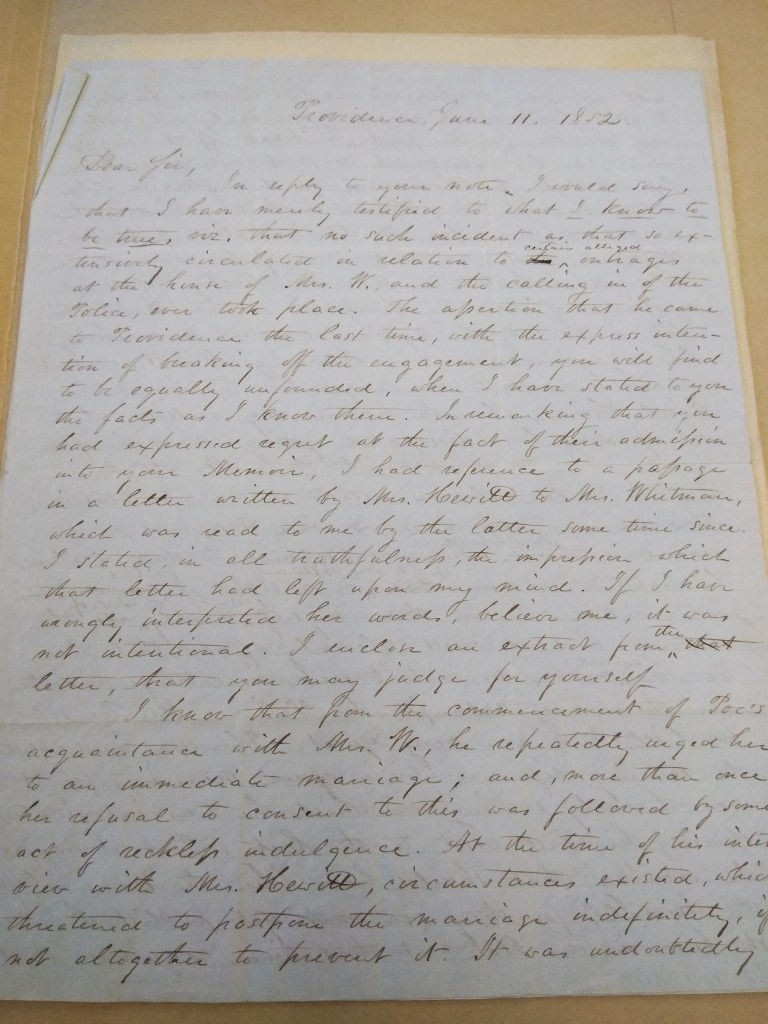
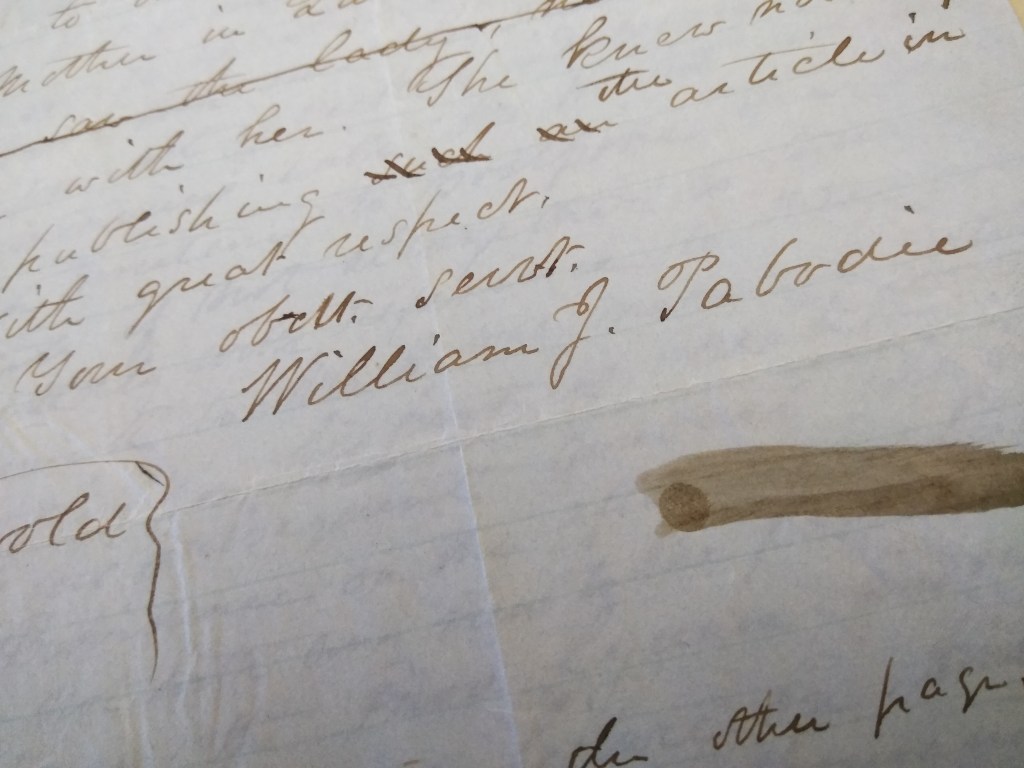
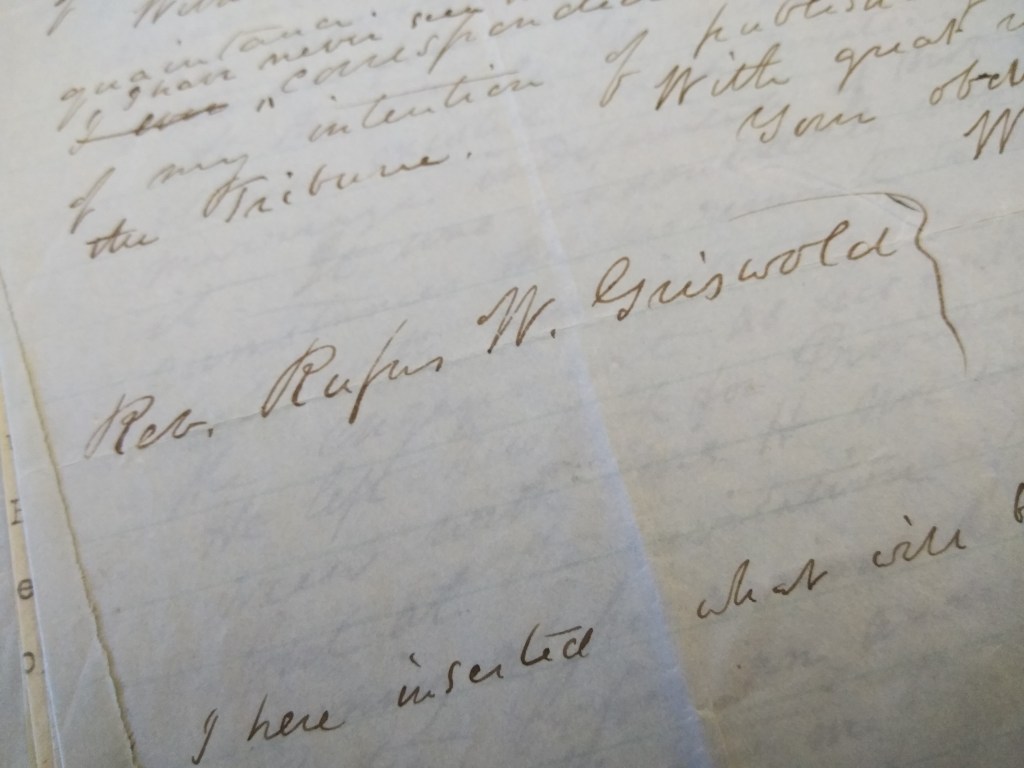
Pabodie’s letter to Griswold dated June 11, 1852. In the collection of Brown University at the John hay Library. Photo by Levi L. Leland.
Despite Pabodie’s strange work against Poe’s relationship with Whitman, he was one of the few people who publicly came to Poe’s defense after Rufus Griswold wrote an awful obituary and fictitious memoir of Poe. It is safe to say that while Pabodie respected Poe’s genius, he knew that it was not in Whitman’s best interest to marry Poe, resulting in his efforts to break them apart.
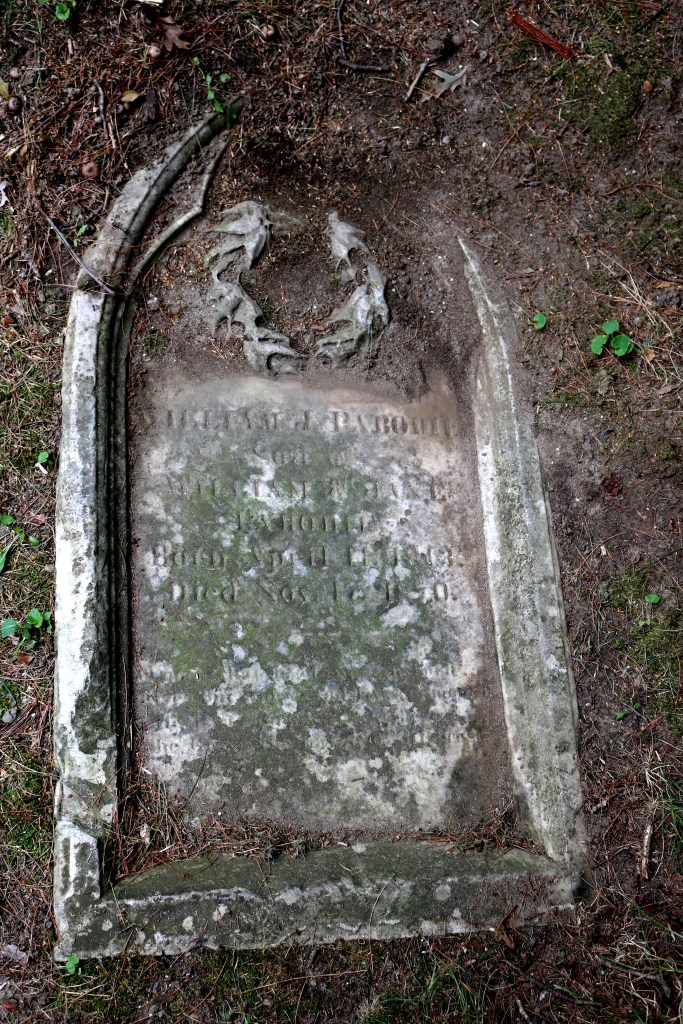
On November 17, 1870, William Jewett Pabodie took his own life. He never married or had children. He is interred in his family’s lot at Swan Point Cemetery.

 Edgar Allan Poe: Rhode Island