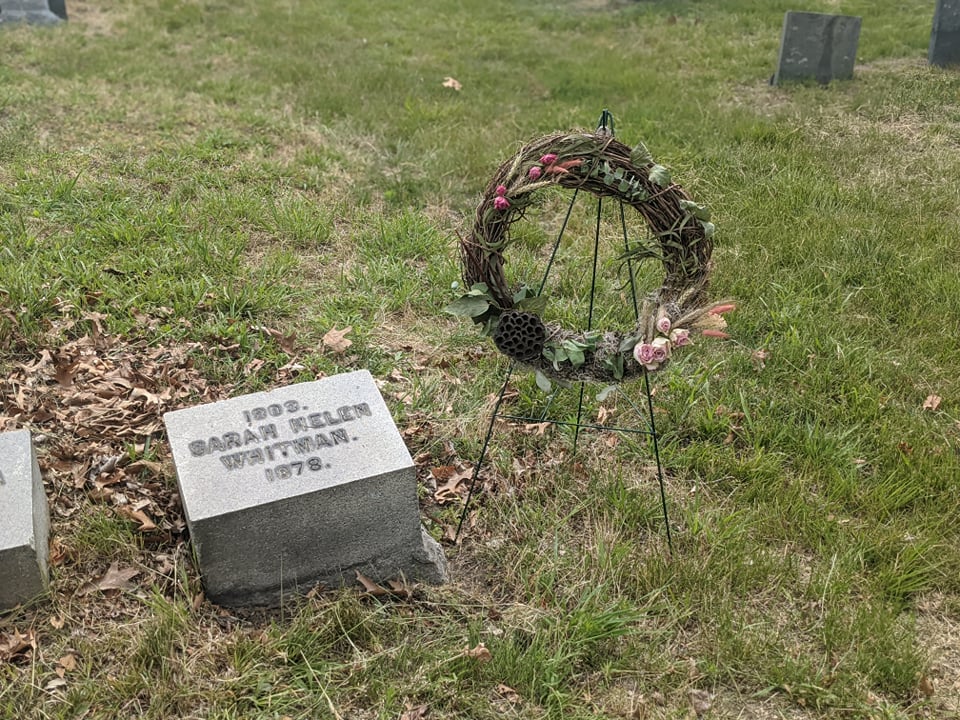
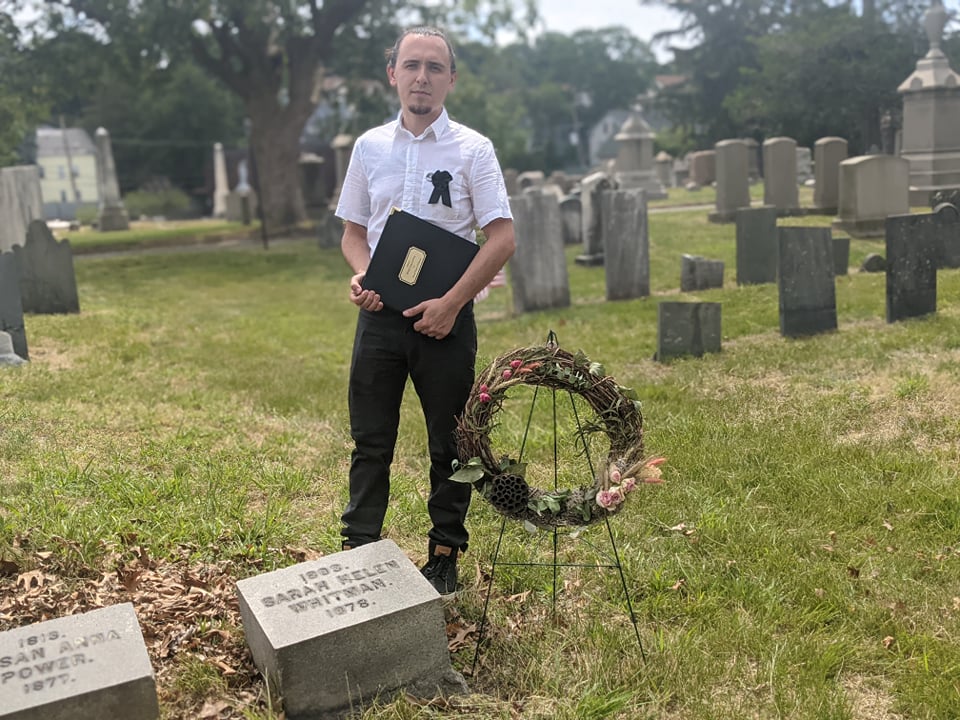
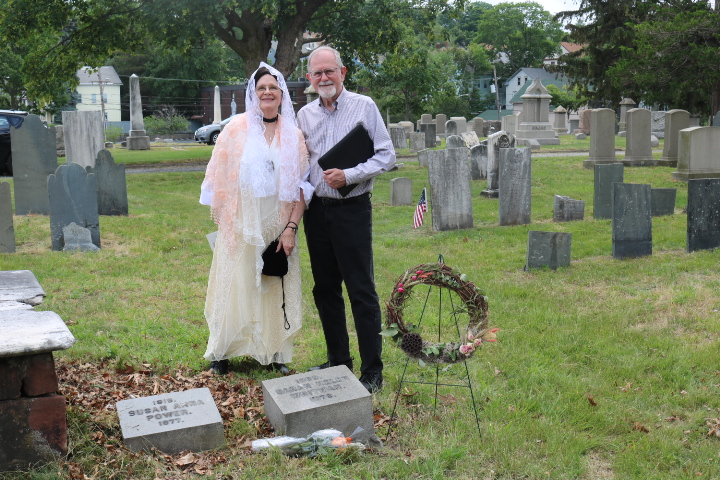
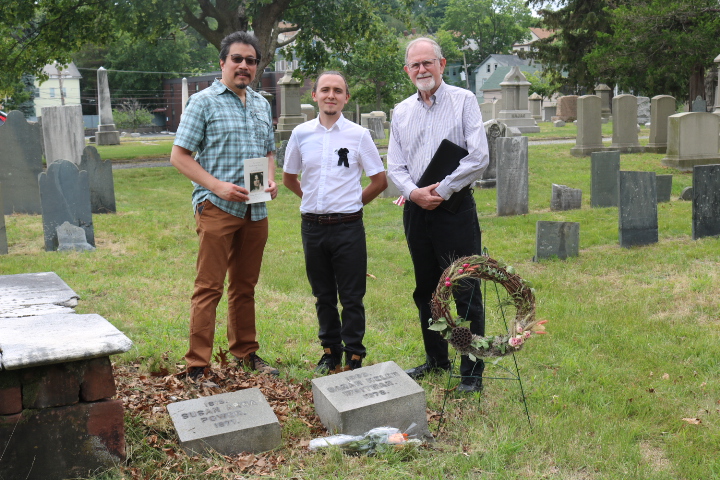
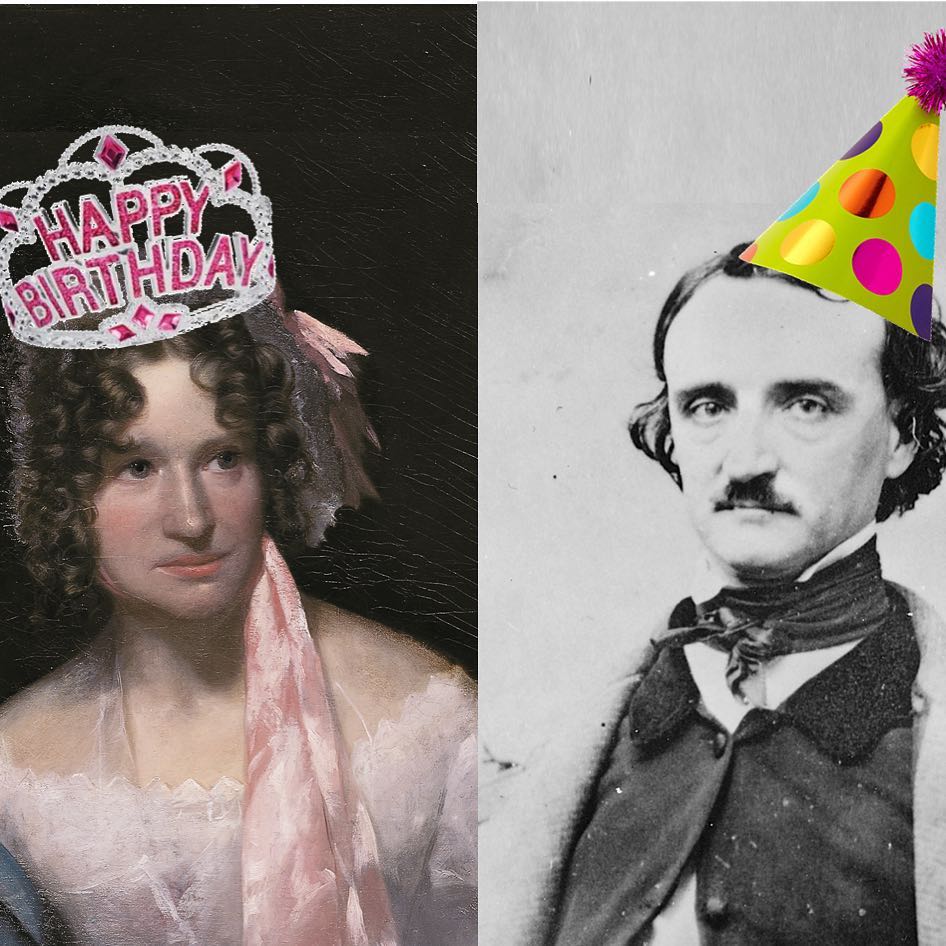
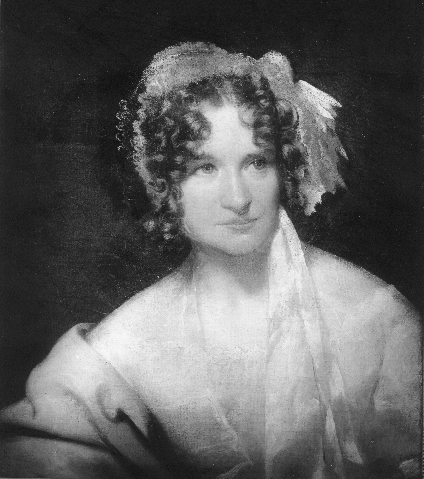
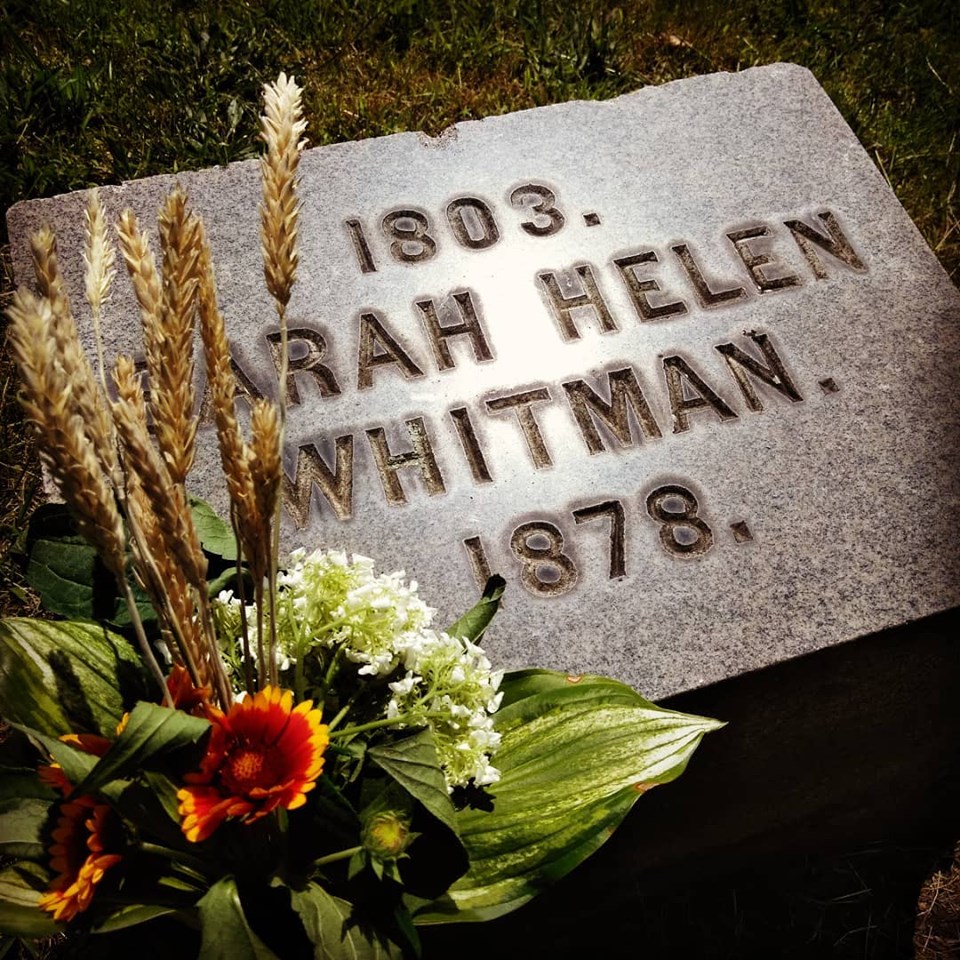
It was only ten months after Whitman had broken off her engagement to Poe that she learned of his unexpected death in Baltimore. After that tumultuous break-up, Poe had written Whitman a letter, to which she did not respond. It is safe to assume that there was a lack of closure for them both, especially for Whitman now that Poe had left this earth for good. However, she spent the rest of her life memorializing Poe and relishing in her connection to him. She corresponded with his friends, relatives, and to Poe’s earliest biographers.
Whitman staunchly defended Poe’s reputation and published her own book in 1860 titled Edgar A. Poe and His Critics. In it, she directly refutes the lies told by Poe’s literary executor, Rufus Griswold. Whitman used her platform to ensure an accurate legacy for the man that she once loved.
One of the many poems Whitman wrote about Poe gives us a poignant view of her initial emotions after his death. The poem was first published under the title “To Him ‘Whose Heart-Strings Were A Lute'” but then later changed to a Latin name, “Resurgemus,” translating to “Rise.” Whitman conveys a sense of relief that Poe had finally found peace in death, and clearly exhibits a comfort in knowing that his soul will live on forevermore.
Resurgemus
I mourn thee not: no words can tell
The solemn calm that tranced my breast
When I first knew the soul had past
From earth to its eternal rest;
For doubt and darkness, o’er thy head,
Forever waved their Condor wings;
And in their murky shadows bred
Forms of unutterable things;
And all around thy silent hearth,
The glory that once blushed and bloomed
Was but a dim-remembered dream
Of “the old time entombed.”
Those melancholy eyes that seemed
To look beyond all time, or, turned
On eyes they loved, so softly beamed —
How few their mystic language learned.
How few could read their depths, or know
The proud, high heart that dwelt alone
In gorgeous palaces of woe,
Like Eblis on his burning throne.
For ah! no human heart could brook
That darkness of thy doom to share,
And not a living eye could look
Unscathed upon thy dread despair.
I mourn thee not: life had no lore
Thy soul in morphean dews to steep,
Love’s lost nepenthe to restore,
Or bid the avenging sorrow sleep.
Yet, while the night of life shall last,
While the slow stars above me roll,
In the heart’s solitudes I keep
A solemn vigil for thy soul.
I tread dim cloistral aisles, where all
Beneath are solemn-sounding graves;
While o’er the oriel, like a pall,
A dark, funereal shadow waves.
There, kneeling by a lampless shrine,
Alone amid a place of tombs,
My erring spirit pleads for thine
Till light along the orient blooms.
Oh, when thy faults are all forgiven,
The vigil of my life outwrought
In some calm altitude of heaven —
The dream of thy prophetic thought —
Forever near thee, soul in soul,
Near thee forever, yet how far,
May our lives reach love’s perfect goal
In the high order of thy star!









 Edgar Allan Poe: Rhode Island